Ruined Photos- A Gallery


Did you like this post? Leave your comments below!
Found this Post interesting? Receive new posts via RSS (What is RSS?) or Subscribe to CR by Email


More posts Labeled: Curious Pictures, funny
Did you like this post? Leave your comments below!
Found this Post interesting? Receive new posts via RSS (What is RSS?) or Subscribe to CR by Email
More posts Labeled: Curious Pictures, technology
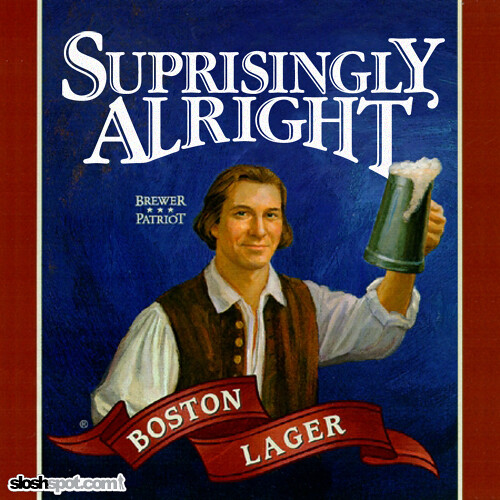
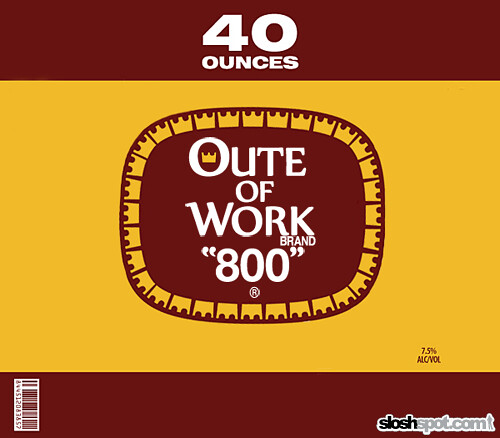
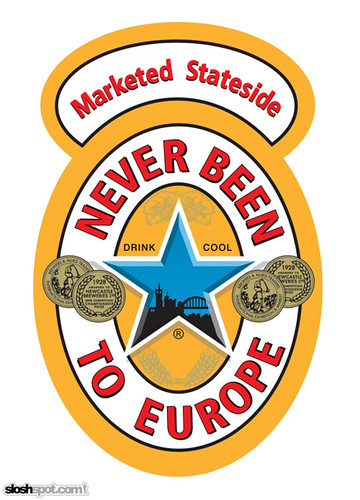
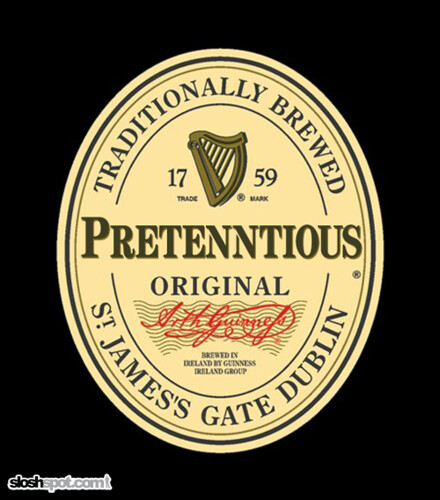
Truth in advertising is not something that is common in the adult beverage industry. Pick-up football games with fit, able-bodied friends, backyard BBQs with 150 of your closest friends, your fat, hairy ass bedding down a Perfect 10 model...these things don't seem to happen so often anymore. Most of the time, it is just you and your beer, watching your prized flat screen television. So you two might as well be honest with eachother, and bravely face reality...12 ounces at a time. [via slashspot]


More posts Labeled: Curious Pictures, funny
When the sun goes down and sky gradually turns dark doesn’t mean you’ll have to keep your camera in the bag. In fact, it is during the night where some of the most beautiful photos are snapped. No doubt shooting under low light is challenging, but by getting familiar with the shutter speed, exposures, lightning and taking advantages of surrounding objects often help compensate the light and create amazing output. [via hongkiat]
Here’s a collection of 60 Examples of Beautiful Night Shots, taken by avid and professional photographers who jumped into action when the sun sets.
Poisonous Darts
by 13thWitness
94th Floor, Chicago, IL
by shutterBRI
Kuala Lumpur City Centre
by Christopher Chan
Hong-Kong night citiscape lights from Victoria Peak
by QT Luong
New York City, USA
by QT Luong
Toronto Skyline
by CarbonSilver
Eiffel Tower
by kayess2008
City of Lights
by paul (dex)
City Night View
by inoc
Metropolis
by VJ Spectra

Rush Hour
by Stuck in Customs
Escarpment
by VJ Spectra
Kowloon
by VJ Spectra
Merlion Night Scene
by fravenang
Rays From Above
by VJ Spectra
Wow Macau
by VJ Spectra
A Night at The Bay Bridge
by MattGranz
Red Bull Illume
by CarbonSilver (gbenz)
Night Photography
by bob west
Night Waterfront Cityscape
by 32tsunami
Westmister Palace, London at night
by QT Luong
Sea Of Tranquility
by VJ Spectra
Night Sky
by VJ Spectra
City of Niagara Falls
by Jon Ramsey
Positron
by Kamuro
Night Life
by marcelgermain
Singapore
by Christopher Chan
Sydney Opera House
by shrillian
The Louvre at Night
by dealived
OAKA Main Entrance View
by NikGr
Ghent by night
by nonkelduvel
Florence Night scene
by choongcheehuei
Manarola
by VJ Spectra
Blue Hour
by веканд
Symphony
by VJ Spectra
Shoot that Bridge
by tomalu
Another late night Drive
by John A Ryan
The Glass House
by darklogan1
Candelária Nights
by Leonardo Paris
Pigeon Point Lighthouse
by Susanne Friedrich
Aurorus Reflectus Colosseo
by Stuck in Customs
Railway
by mara-mara
Night Walk
by Gerrit Wenz
Milan Train Station at Midnight
by Stuck in Customs
Capitol View
by Todd Klassy
Invisible Sun
by jrtce1
ExPort
by VJ Spectra
Night at Loch Lomond
by guillaume-dauphin
If you are fan of firework photography, check out this entry we’ve previously written: 100 Most Breathtaking Fireworks in The World
Liftoff
by VJ Spectra
Engage
by VJ Spectra
Australia Day
by VJ Spectra
Berlin at Night
by d5e
Quantum Photonic
by VJ Spectra
Poteet Strawberry Festival 2007
by bceichman02
Interstellar Overdrive
by VJ Spectra
Intersection
by VJ Spectra
Curves
by VJ Spectra
Human Pendulum
by Kirpernicus
Star Trails
by bob west
More posts Labeled: CR's Favorites, Curious Pictures
Australian scientists have developed a "trojan horse" therapy to combat cancer, using a bacterially-derived nano cell to penetrate and disarm the cancer cell before a second nano cell kills it with chemotherapy drugs. [via reuters]
The "trojan horse" therapy has the potential to directly target cancer cells with chemotherapy, rather than the current treatment that sees chemotherapy drugs injected into a cancer patient and attacking both cancer and healthy cells.
Sydney scientists Dr Jennifer MacDiarmid and Dr Himanshu Brahmbhatt, who formed EnGenelC Pty Ltd in 2001, said they had achieved 100 percent survival in mice with human cancer cells by using the "trojan horse" therapy in the past two years.
The scientists plan to start human clinical trials in the coming months. Human trials of the cell delivery system will start next week at the Peter MacCullum Cancer Center at the Royal Melbourne Hospital and The Austin at the University of Melbourne.
The therapy, published in the latest Nature Biotechnology journal, sees mini-cells called EDVs (EnGenelC Delivery Vehicle) attach and enter the cancer cell.
The first wave of mini-cells release ribonucleic acid molecules, called siRNA, which switch off the production of proteins that make the cancer cell resistant to chemotherapy.
A second wave of EDV cells is then accepted by the cancer cell and releases chemotherapy drugs, killing the cancer cell.
"The beauty is that our EDVs operate like 'Trojan Horses' They arrive at the gates of the affected cells and are always allowed in," said MacDiarmid.
"We are playing the rogue cells at their own game. They switch-on the gene to produce the protein to resist drugs, and we are switching-off the gene which, in turn, enables the drugs to enter."
DISARMING TUMOUR CELLS
RNA interference, or RNAi, is designed to silence genes responsible for producing disease-causing proteins and is one of the hottest areas of biotechnology research. RNA was the basis of the 2006 Nobel Prize in medicine.
Dozens of biotechnology companies are looking for ways to manipulate RNA to block genes that produce disease-causing proteins involved in cancer, blindness or AIDS.
Brahmbhatt said that after treatment with conventional drug therapy, a large number of cancer cells die but a small percentage of the cells can produce proteins that make cancer cells resistant to chemotherapeutic drugs.
"Consequently, follow-up drug treatments can fail. The tumors thus become untreatable and continue to flourish, ultimately killing the patient," said Brahmbhatt.
"We want to be part of moving toward a time when cancers can be managed as a chronic disease rather than being regarded as a death sentence," he said.The Nature report said the mini-cells were "well tolerated with no adverse side effects or deaths in any of the actively treated animals, despite repeated dosing."
"Significantly, our methodology does not damage the normal cells and is applicable to a wide spectrum of solid cancer types," said MacDiarmid.
"The hope is that the benign nature of this EDV technology should enable cancer sufferers to get on with their lives and operate normally using out-patient therapy."
Did you like this post? Leave your comments below!More posts Labeled: health
It may seem like a small change, but David Hill, vice president of corporate identity and design at Lenovo, points out, "Any time you start messing around with the keyboard, people get nervous."
Computers get smaller and faster every year, but keyboard design remains largely stuck in the 19th century. When Beijing-based Lenovo, which bought
To understand Lenovo's concern, turn the clock back to the 1800s.
Back then, fast typing would jam typewriters, so a keyboard layout that slowed down flying fingers was devised. The commonly used "A" key, for example, was banished to the spot under the relatively uncoordinated left pinky.
Typewriter technology evolved. Mainframe computing led to function keys and others of uncertain use today. The PC era dawned. Yet many laws of keyboard layout remain sacred, like the 19-millimeter distance between the centers of the letter keys.
Tom Hardy, who designed the original
IBM reversed course with the next version to quiet the outcry from skilled touch-typists.
"Customers have responded with a resounding, 'Don't fool with the key unless you can you can improve it,"' said Hardy, now a design strategist based in Atlanta.
PC makers relearned this lesson in the past year, as netbooks — tiny, cheap laptops — have become popular with budget-conscious consumers. Early models boasted screens measuring as little as 7 inches on the diagonal, requiring shrunken keyboards that many people found to be too small. Some even repeated IBM's mistake by cutting the size of the "Shift" key.
The computer makers have largely shifted focus to 10-inch (25-centimeter) or larger netbooks, so that there'd be room for near-standard keyboards or better.
Push-back from consumers hasn't stopped companies from testing and even manufacturing keyboards with unconventional designs over the years, in some cases demonstrating that people could learn to type faster than on standard QWERTY keyboards, so-called because of the arrangement of the top row of letters. During Hardy's time at IBM, researchers came up with ball-shaped one-handed keyboards that he said were faster than standard ones.
"A lot of those things never passed the business planners and the bean counters because they were concerned about manufacturing something that was just basically an experiment," Hardy said.
Ones that did get made have remained niche.
Paul Bradley, an executive creative director at the global design group Frog Design, said makers of ergonomic keyboards that also improved typing speed were counting on concern over carpal tunnel syndrome during the dot-com boom of the 1990s to drive demand, but the market never materialized.
If ever there were a time to make radical changes to the keyboard, now might be it. As evidence, Bradley noted the high tolerance many younger people show for tapping out cell-phone messages on tiny keypads using only their thumbs.
Lenovo is on a more conservative course. In designing the new ThinkPad, it installed keystroke-tracking software on about 30 employees' computers (They volunteered). On average, they used the "Escape" and "Delete" keys 700 times per week, yet those were the only "outboard" keys, or non-letter keys, that hadn't been enlarged.
Lenovo made those two keys about twice as long in the vertical direction to fit the way people reach up, rather than to the side, and then deliberately whack those keys, said Hill, the Lenovo executive who was at IBM for nearly 20 years before the 2005 sale to Lenovo. The new design cuts down on accidental taps of the "End" and "Insert" keys, too.
The new keyboard isn't perfect. Hill called "Caps Lock" a frustrating hangover from typewriter days, a key that can introduce garble, emulate shouting or foil password entries without the user noticing.
"I think maybe sometime in the future, we should maybe entertain removing it," he said. "It's one of those things you kind of have to approach with caution. There might be some people out there who just really like their 'Caps Lock' key for whatever reason."
Did you like this post? Leave your comments below!More posts Labeled: technology
How many people does it take to break the Internet? On June 25, we found out it's just one -- if that one is Michael Jackson.
[via cnn] The biggest showbiz story of the year saw the troubled star take a good slice of the Internet with him, as the ripples caused by the news of his death swept around the globe.
"Between approximately 2:40 p.m. PDT and 3:15 p.m. PDT today, some Google News users experienced difficulty accessing search results for queries related to Michael Jackson," a Google spokesman told CNET, which also reported that Google News users complained that the service was inaccessible for a time. At its peak, Google Trends rated the Jackson story as "volcanic."
As sites fell, users raced to other sites: TechCrunch reported that TMZ, which broke the story, had several outages; users then switched to Perez Hilton's blog, which also struggled to deal with the requests it received.
CNN reported a fivefold rise in traffic and visitors in just over an hour, receiving 20 million page views in the hour the story broke.
Twitter crashed as users saw multiple "fail whales" -- the illustrations the site uses as error messages -- user FoieGrasie posting, "Irony: The protesters in Iran using twitter as com are unable to get online because of all the posts of 'Michael Jackson RIP.' Well done." The site's status blog said that Twitter had had to temporarily disable its search results, saved searches and trend topics.
Wikipedia saw a flurry of activity, with close to 500 edits made to Jackson's entry in less than 24 hours. CNET reported that by 3:15pm PDT, Wikipedia seemed to be "temporarily overloaded."
The LA Times, the first news organization to confirm Jackson's death, suffered outages. The site also reported that AOL's instant messenger service had been hit, quoting an AOL statement that said, "AIM was down for approximately 40 minutes this afternoon." The statement said, "Today was a seminal moment in Internet history. We've never seen anything like it in terms of scope or depth."
By Friday morning, news sites seemed to be coping with traffic but Jackson fan site mjfanclub.net was still performing sluggishly. Mashable.com reported that tributes to, and remarks upon, Michael Jackson's death were responsible for 30 percent of tweets.
As with any breaking piece of news on the Web, the reports of Jackson's death sparked something of a feeding frenzy -- and with that came rumor that dragged in other celebrities completely unconnected to the King of Pop's death.
One Wikipedia prankster wrote that Jackson had been "savagely murdered" by his brother Tito, who had strangled him "with a microphone cord."
Soon rumors spread online that movie star Jeff Goldblum had fallen from the Kauri Cliffs in New Zealand while filming his latest movie. On several search engines, "Jeff Goldblum" soon became the only non-Jackson-related term to crop up in the top 10.
The rumors forced Goldblum's publicist to issue a statement to media outlets, saying: "Reports that Jeff Goldblum has passed away are completely untrue. He is fine and in Los Angeles."
At the same time Harrison Ford was also rumored to have fallen from a yacht off the south of France.
Web site snopes.com, which shoots down rumors, gossip and urban legends -- and how they originated -- said the likely culprit was a Web site which allows users to input celebrity names -- and then inserts them into fake templated stories (a further variant has stars dying in a plane crash).
In a sense the feeding frenzy was understandable -- Jackson's death, coming only hours after that of 1970s icon Farah Fawcett, left many Web users, shocked by the news of Jackson's death, asking what would happen next. In this febrile climate any rumor runs the risk of being seized on, believed and treated with more credulity than usual.
The need of the professional media to be first with the news -- many did for a short time report the Goldblum rumor as fact -- adds further veracity. And, of course, the whole process is speeded up by the Web.
There is also, of course, the old adage that celebrities die in threes, with the deaths of Gianni Versace, Princess Diana and Mother Teresa in 1997 frequently held up as an example of this.
But while Diana and Teresa passed away with seven days of each other in August and September, Versace was killed in early July. Their deaths were most keenly mourned by the same broad sections of the public -- and hence were inextricably interlinked. The Web can link disseminate news -- but like any form of communication it can also help us create what we expect to see next.More posts Labeled: technology
Did you like this post? Leave your comments below!
Found this Post interesting? Receive new posts via RSS (What is RSS?) or Subscribe to CR by Email
More posts Labeled: CR's Favorites, Curious Pictures
Though many forms of currency are visually conservative—featuring portraits of notable figures and leaders—there is a class of cool cash from around that globe with eye-popping colors and designs. More than just legal tender, some banknotes serve as an artistic merging of technology, color schemes and cultural references. From Egypt’s display of ancient pharaohs to Kazakhstan’s exotic electric-blue design, the collection of bills below boasts some of the world’s best moola. [via womansday]
Egyptian Pound
Above is one of seven denominations of Egyptian banknotes that were introduced into circulation by the Central Bank of Egypt in 1961. The side written in Arabic has a picture of the Sultan Qayetbay mosque and the side written in English displays a carving from one of the temples at Abu Simbel, which features four identical statues of Pharaoh Ramses II, who ruled Egypt for 67 years. Estimated Exchange Rate: 1 U.S. dollar = 5.55575 Egyptian pounds
Swiss Franc
In 1995, the current and eighth series of Swiss banknote designs were slowly released into circulation. Each denomination features a portrait of a famous Swiss artist atop a bold color scheme—further demonstrating Switzerland’s ever-chic artistic reputation and forward-thinking ways. The front of this bill features composer Arthur Honegger, while the back depicts elements (including a locomotive wheel and a piano keyboard) that evoke his famous composition “Pacific 231.” Estimated Exchange Rate: 1 U.S.dollar = 1.08492 Swiss francs
Kazakhstan Tenge
Kazakhstan’s monetary unit, the tenge, was introduced in 1993—replacing the Soviet ruble as the national currency. The most current design of the banknote features a geographical outline of the country on one side and overlapping national treasures on the other, which include the Astana-Baiterek Monument, the Kazakhstan flag, the signature of President Nazarbayev and lyrics from the Kazakh national anthem. Estimated Exchange Rate: 1 U.S. dollar = 148.330 Kazakhstan tenge
Hong Kong Dollar
In July 2007, Hong Kong became the 25th country to gradually introduce a $10 polymer banknote—both more durable and secure than the standard paper banknote. Both $10 bill version are considered legal tender and bear the same design—the beautiful abstract arrangement of geometric shapes in shades of mauve, purple, blue and yellow shown above. The design makes impressionistic references to modern architecture as well as to festive and cultural activities in Hong Kong. Estimated Exchange Rate: 1 U.S. dollar = 7.74997 Hong Kong dollars
Aruban Florin
In 1986, Aruba’s new governing power created a unique currency called the florin to replace the Antilles guilder. Starting in 1990, the bills were redesigned by Evelino Fingal, Aruban graphic artist and director of the Archaeological Museum, who found his inspiration for the eccentric designs in Native American tribal paintings, archeological pottery shards and native wildlife. On each denomination, the images are layered to create a modernistic collage of cool geometric shapes. Estimated Exchange Rate: 1 U.S. dollar = 1.77000 Aruban florins
South African Rand
In 1961, the South African rand was introduced to replace the pound, an act that coincided with the country’s declaration as a republic. However, it wasn’t until the 1990s that the current banknote design—sans the face of Dutch administrator and Cape Town founder Jan van Riebeeck—was introduced to post-apartheid South Africa. The color-infused denominations each feature one of the “Big Five” game—Africa’s most-difficult-to-hunt wildlife species—the lion, African elephant, Cape buffalo, leopard and black rhinoceros. Estimated Exchange Rate: 1 U.S. dollar = 8.13147 South African rand
Antarctican "Dollar"
The collector’s item shown above is part of the A1 collector’s series and is nonlegal tender. Created by the Antarctica Overseas Exchange Office, the bill designs are based on regional geography and wildlife. The one displayed above features Peterman Island on the front and the picturesque image of penguins jumping into the nearly freezing waters off the Ross Ice Shelf on the reverse.
Dutch Guilder
This former currency of The Netherlands was replaced by the euro on January 1, 2002. Among the bills, whose loss the Dutch surely mourned, was this bright yellow sunflower-clad 50-guilder banknote, which was designed by Jaap Drupsteen in the 1990s. The series, which portrayed an intricate pattern of geometric designs, including radio schema and resistors, boasted a colorful array of sunflowers, lighthouses and birds were said to encapsulate classic Dutch artistry.
Australian Dollar
Introduced in 1966 to replace the pound when Australia adopted decimal-based currency, the Australian dollar bears a portrait of two prominent Australian figures on each side and reflects the artistic and cultural values of the era in which they lived. In the 1980s, polymer notes were introduced into circulation—boasting security updates which included a transparent window with an optically variable image of British explorer, navigator and cartographer Captain James Cook. Estimated Exchange Rate: 1 U.S. dollar = 1.25521 Australian dollars
CFP Franc
The currency of French Polynesia, New Caledonia, and Wallis and Futuna is the CFP Franc, which was introduced in 1945. Typically, one side of the banknote shows landscapes or historical figures of New Caledonia, while the other side features those of French Polynesia. The front of the bill pictured above depicts a coastal landscape of Huahiné and a French Polynesian Tahitian woman; the back shows coral and fish of New Caledonia, and a New Caledonian Melanesian woman wearing hibiscus flowers. Estimated Exchange Rate: 1 U.S. dollar = 84.42800 CFP francs
Cook Islands Dollar
Cook Islands, the 15 small islands that make up the self-governing parliamentary democracy in free association with New Zealand, has a currency that is slowly falling out of favor (though still remains legal tender). Introduced in 1987 (and revamped in 1992) the banknotes depict various aspects of South Pacific life and have an exchange rate similar to the New Zealand dollar. The 1987 currency note above shows a nude Ina (a Polynesian mythological figure) riding a shark on one side and a traditional canoe alongside the god Te-Rongo on the other. Estimated Exchange Rate: 1 U.S. dollar = 1.57208 New Zealand dollars
Zambian Kwacha
In 1968, Zambia introduced its kwacha banknotes. Since then, the currency has received a number of design reinventions, including the release of polymer notes in 2003—making Zambia the first African country to do so. The fish eagle is the main feature on most banknotes; the bird’s excellent vision and swift reaction is a symbol of the country’s focus on economic growth and resiliency. Printed on the back is the Freedom Statue, which represents Zambia’s struggle for freedom in the precolonial days. Estimated Exchange Rate: 1 U.S. dollar = 5,060 Zambian kwacha
Did you like this post? Leave your comments below!More posts Labeled: Curious Pictures, Top 10
Dumisani Rebombo and his friend raped a young girl in their village in South Africa when they were teenagers.
Years later, he returned to the same village to find the woman he attacked and begged for her forgiveness. [via bbc]
Mr Rebombo, 49, is one of thousands of men in South Africa who admit to having carried out a sexual assault - one in four, according to a recent survey.
He told BBC News why he feels so many young men in his homeland engage in the ill-treatment of women.
When I was 15 years old, I took part in a gang rape.
Before the incident, I was constantly jeered for not being man enough.
At the time I was not ready to have a girlfriend when all my friends did.
I did not tend the cattle or sheep, nor did I attend the initiation school [where South African teenagers are circumcised in traditional rites of passage].
This fuelled my daily jeers.
| Dumisani Rebombo |
A friend and my cousin pressured me to prove that I was man enough, by taking part in the rape of a teenage girl in the village.
This was termed "straightening her up", since she did not want to go out with any of the local boys.
I succumbed to this daily pressure and on the day of the incident, when they saw me trembling with fear, they ordered me to take marijuana and beer to defeat my fears.
I did just that and the two of us [my friend and I] proceeded to rape the girl.
Guilty and scared
Afterwards, I was terrified.
I felt guilty but also scared that the news could reach my mother who had a high standing in the community.
The following day, when we went for our soccer practice, this incident was reported to all the other football players.
Dumisani Rebombo said he was prepared to face jail |
On hearing the news, they sang and clapped as if we had done something right.
This helped to stop the jeering somewhat and I was allowed to associate with the other boys.
I still felt guilty, at least partially so, especially when I saw the girl in the village. Sometimes I tried to avoid meeting her.
But slowly, over time, I began to think less and less about the incident.
I left my village in Limpopo Province and went to live in the city and joined a religious group from which I learned a lot about love and respect for all.
Strangely, I did not think much of the incident - I just went on with my life.
I started work with an NGO (non-governmental organisation) where I mostly worked with unemployed mothers.
Every Monday morning, the women reported incidents of abuse in different forms.
| Dumisani Rebombo |
As they did this, I could not help it but give way to introspection.
It was as if every time I heard of a negative act by a man, I was forced to go back to my own incident.
I then asked my employers to train us in a methodology which would target boys and men.
They did this and very soon, I felt challenged, self-consciously, to set an example to the men I was teaching.
Seeking forgiveness
I took a decision to go back to find the woman I raped.
I realised that the woman needed justice.
But also, I wanted to ask for forgiveness, now that I understood the effects and consequences for someone who has been raped.
South Africa's government has been urged to solve the rape epidemic |
I went to my pastor about this. His response was: "You are saved now, you were once in the mud, but now you know the truth and you are therefore OK."
He also asked me if I was ready to go to jail. He said: "What if the woman went to the authorities?"
My answer was: "If I go to jail, that would be justice for that woman."
I therefore took the journey to the north.
I wanted her to know that I felt bad about what I had done to her, that I was a changed man and I was working with other men to prevent rape.
When we met, she showed a wry smile on her face.
Since we were at a public clinic, she thought I was a doctor or someone from the Ministry of Health.
I related my story to her. She looked at me and revealed that she had since been raped on two other occasions.
| Dumisani Rebombo |
She started crying. She told me how she often cringes when her husband touches her.
She told me that her life was never the same emotionally following these incidents.
Worse still, she was not ready to tell her husband of what had happened.
Finally, she said that she forgave me, and thought that I had meant well with all that I had said.
I left that room with a new burden - to do something about rape in my community and my country.
Machismo feelings
If you asked me: "What motivates so many men in South Africa to engage in un-consensual sex?" I would say that it is the machismo feelings and beliefs, coupled with patriarchal processes and tendencies.
I think that we raise boys in the wrong way, but later on in their lives we want to see them as different men who care and love.
My advice to young men who feel under pressure to rape, is to surround yourselves with good friends.
Learn to talk to someone about what is going on inside.
For with this, one can teach the young men to have other means of solving conflict.
And above all, to grow up respecting girls.
Did you like this post? Leave your comments below!
(6:02) We've just learned Michael Jackson has died. He was 50. [via tmz]
Michael suffered a cardiac arrest earlier this afternoon at his Holmby Hills home and paramedics were unable to revive him. We're told when paramedics arrived Jackson had no pulse and they never got a pulse back.
A source tells us Jackson was dead when paramedics arrived.
Once at the hospital, the staff tried to resuscitate him but he was completely unresponsive.
We're told one of the staff members at Jackson's home called 911.
La Toya ran in the hospital sobbing after Jackson was pronounced dead.
Michael is survived by three children: Michael Joseph Jackson, Jr., Paris Michael Katherine Jackson and Prince "Blanket" Michael Jackson II.
Did you like this post? Leave your comments below!
Found this Post interesting? Receive new posts via RSS (What is RSS?) or Subscribe to CR by Email
As clowns have taught us, there is a very fine line between mirthful and downright creepy. [via cracked]
But when you look at some children's toys from the last few decades, you can't help but wonder how in the hell they designed these things without realizing how deeply, deeply unsettling they are. Just take a look at...

We like to think we're above pointing out that this thing totally looks like a cock, which by the way, it does. A cock that shoots dangerous projectiles that can put an eye out (chew on that, Freud).
But besides clearly looking like something mom mistakenly bought for herself, the Sixfinger fulfills every child's dream of having a grotesque birth defect. As you can see from the downright nightmarish ad, it might as well be a strap-on clubbed foot that's also a water pistol.

Presumably the Face Bank exists for parents who want to terrorize their children out of ever asking for an allowance.
Seriously, kids would rather swallow handfuls of change themselves than come anywhere near this damn thing. It looks like Leatherface's mailbox. Banpresto, the company responsible for the Face Bank, redesigned their product to make it a little less creepy. The new version looks like someone made Dustin Hoffman into a Gumby character and then chopped the top of his head off.

Oh yeah, totally less creepy without the fucking eyes.

Besides being a vaguely racist four-foot tall combination of every non-white culture in the world, Big Loo will haunt any corner of the room you stick him in. He has a pendulous right arm perfect for crushing the malleable skulls of small children, and a grin that says, "As soon as you fall asleep, I will wheel myself down the hall and flay your parents alive."
If you want to hear him actually speak, just turn a giant crank on the back of his head and listen as he spits out what sounds like the garbled distress call from Event Horizon.
Also, Big Loo shoots darts from his nipples. From his nipples. The best thing to do if you find this unholy bastard under your Christmas tree would be to chain him up in the closet. And then move out.

Nothing screams fun like drilling holes into the face of a fangletoothed Telly Savalas. The "gold-colored compound," presumably included to simulate gold fillings, really just makes it look like the guy ate a fistful of shit on his way to the dentist's office. Maybe next Christmas, Toys "R" Us will put out the "Meth Teeth" edition so kids can delight in ripping molars out of a plastic Jodie Sweetin.

Of course the far more unsettling issue is teaching your kids the lesson that "drilling teeth is fun!" when most of them are perfectly capable of finding daddy's power drill in the garage. What could possibly teach children a worse lesson than that?

Ah, here we go. Eviscerate-Me Erwin seems like the type of gift you'd package along with a Cannibal Corpse record and a poster of Marilyn Monroe with the eyes cut out.
We know you're supposed to encourage your child's talents, but give them this doll to cut open and pretty soon they're moving up to frogs, cats, dogs, hookers and federal prison. Although we must admit, Erwin would make the most entertaining Show and Tell day ever.

A jack-in-the-box is already designed to startle a child, so spring-load one with a dead-eyed purple space Hummel and every toddler in the room will have shit tearing through the back of their OshKoshes. There's no reason a catatonic alien doll should ever leap out at anyone unless it's holding a birthday cake or something. And even then we think it should knock first.
But what takes this to the next level beyond simply "startling" is the expression on this fucker's face. Look at it. He's not smiling, kids. That's a look of alien curiosity and/or hunger that we refuse to believe was accidental.


Just squeeze a stumpy orange dick and watch fear come yodeling towards you in a pair of fat dancing ghost pants. This was either invented by a Nazi war criminal or Walt Disney. Maybe both.


We're half convinced some company had a warehouse full of World War I-era gas masks and figured they could move the things by gluing a stuffed animal face on there.
But as creepy as the thing looks when it's off, stick it on a child's face and now you've got a disembodied dog head with two giant warped child eyes staring out at you. At least they could have tinted these things to make them quite not so disturbing. Oh, wait...

Yeah, that's actually much worse.

Little Island is a Japanese company that has made it possible for you to get a doll with your own face on it and speak to you in your own voice, as well. Just make sure you have a streetwise Asian boy around to keep the Maharaja from stabbing it with a jeweled dagger, because we're pretty sure this thing is a fucking Voodoo doll. Either that or it's a replicant sent to take your place after its robot overlords vacuum your brains out in your sleep.
Actually, even if it's none of those, we still have the very unsettling fact that it is apparently a toy intended for adults. We can't think of a single non-creepy use for such a thing unless they intend to use it as a decoy to fool incredibly incompetent assassins.

The manufacturers claim that "Struts," the My Little Pony-esque horses dressed up in 19th Century lingerie and stripper heels, "combine a little girl's love for horses with her love for fashion dolls."
To us, however, these things appear to be the product of a failed teleportation experiment where instead of Jeff Goldblum and a fly, they had Christina Aguilera and Sea Biscuit.

This flying stunt-monkey seems like a perfectly straightforward toy, until you spot the advertising point "Hear Me Scream!"
Apparently the Amazing Flying Monkey is designed to be used like a slingshot, so this is literally a shrieking terror beast to be fired into the faces of other kids.
(It also poses as a standard toy packaged by people who don't know how to conjugate the verb "fly.") 
A hairless, vacant expression, a trunk full of disguises, a bolo tie--without question, Hugo is a man of a thousand serial murders.
This doll is like a Ted Bundy Potato Head. The face on the box has the ghoulish stare of a guy that literally can't wait to stab you to death and drag your body down to his basement. He's even wearing disposable clothing, presumably to be wrapped around severed limbs to keep them from bleeding all over the interior of the station wagon of a thousand screams.
But on top of all that... why the fuck does he need those creepy little atrophied arms? They serve no purpose! They intentionally went out of their way in the manufacturing process to make him just a little more terrifying.

So say hello to the "Mindflex." It's a machine that gives your children telekinesis.
No, it's not a hoax, it's made by toy giant, Mattel. Your kid straps the device to his head, and suddenly he can levitate a little ping pong ball through pure thought.
OK, he is actually manipulating a tiny fan that blows the ball causing it to hover various heights. With his mind. The child can manipulate the fan through the machine reading his brainwave patterns.
Hey, remember that old Twilight Zone episode where a kid takes over his town and forces everyone to do his bidding, because he can think anything and it becomes reality? Including turning people into giant Blippy in the Boxes?

It's only a matter of time, people.
Yeah, you think we're overreacting, that it can never happen, but you also didn't think we'd have mind-reading telekinesis machines in Toys "R" Us this year.
Did you like this post? Leave your comments below!More posts Labeled: Curious Pictures, funny
BK ad shows that fast food can not only taste bad, it can also be in bad taste. Whoa. [via garr]
Bon-Food Pte Ltd is the authorised franchisee of Burger King in Singapore. This is their website and the source of this image:
http://www.bon-food.com.sg/promotions/promotions.aspx
On their website they touch on who their target is: "In Singapore, the bright and vibrant Americana décor has made our restaurants the favourite meeting place for young people, including college students and working professionals." OK, so it's not families or young children (I guess), but this ad is still insulting to teens and young professionals. Where's the respect for your customer? Even putting the objectification of the woman in the ad aside, this ad is poor simply because it's so, well, stupid. It's too easy and too old; it's not clever. Is this Burger King? Really? Who on earth at Burger King thought this would be a good idea? Unless... if the goal was to make an ad so utterly stupid and bad that everyone will talk about it. If so, well done. I guess I just do not understand the BK brand (or I do not understand their market). Are they saying that since our food is so unremarkable, let us change the conversation away to anything but the actual product?
About the poster...
A Poster, must (1) get attention, (2) be understood, (3) be remembered and finally (4) we hope a desired action is taken. Usually designs fail to even get the first one, attention (there's a lot of noise out there). But if the ad (poster, billboard, etc.) does get noticed they are not always read/understood (and therefore not remembered). This one is an interesting: They really got our attention and we will remember the ad, but I'm not sure I understand what it means beyond the *obvious* sexual reference. So, they got my attention and I will remember it, but I'm not sure what "it" is, therefore, I'm not sure how this translates into sales. Along these lines, here's a comment from Advertising Age before this ad was out: "With Burger King, Crispin has been very good at cutting through the clutter, but it hasn't positioned the brand very well."More posts Labeled: Curious Pictures, funny
Say Yes to Stress
As long as stress doesn’t completely overtake you (too much burns the body out), a little bit isn’t such a bad thing. “It can motivate you into action and clear the mind,” says Judith Orloff, MD, author of Emotional Freedom and a psychiatrist at UCLA. According to Dr. Orloff, good stress is defined as when you experience a short burst of the hormones adrenaline and cortisol, which rev up your system, propelling you to better handle and complete tasks. A little stress has helped actors give their finest performances and brides plan the most elaborate weddings. Adds Orloff, “The stress hormones help make you more present, so you are sharper.”
Meaty Subject
Meat often gets a bad rap—the threats of obesity, high cholesterol, and even colon cancer are enough to make anyone decline that next barbecue invitation—but experts now advise that you can have your steak and spare the guilt. “Some beef fat is monounsaturated, which is the kind of fat that is good for you and actually helps lower LDL, or bad cholesterol, like the kind found in olive oil and avocado,” says George Faison, COO of DeBragga and Spitler and owner of DeBragga.com, an online purveyor of high-quality meats. Meat from grass-fed cattle, Faison explains, is also lower in saturated fat than conventionally raised beef and has more omega-3 fatty acids, vitamin E, and conjugated linoleic acid—all healthy, beneficial components. In fact, according to the American Meat Institute, there are 29 cuts of lean beef that have fewer calories and are leaner than the same size serving of salmon. (And, really, who wants to serve salmon at a barbecue?)
Special Dark
Though milk chocolate might win in a popularity contest, many experts have been lauding dark chocolate (especially the variety containing high cocoa content) because it’s chock-full of antioxidants. And according to Jordan Rubin, New York Times best-selling author of The Maker’s Diet, the sweet stuff releases endorphins and serotonin, which act as antidepressants. Some proponents also say that just a few pieces of the excellent-quality dark chocolate can seriously curb your cravings. It’s rich in chemicals that stabilize your brain when it longs for sugar—so it goes a long way. For another healthy bonus, go organic, too: “Regular chocolate is sprayed with heavy pesticides that we end up consuming,” Rubin says.
Let the Sunshine In!
After all we’ve learned about the sun’s damaging effects—uneven pigmentation, sagging skin, premature wrinkles, and, most insidious of all, melanoma—who wouldn’t want to swear off the beach and see the parasol experience a sartorial renaissance. But let’s not act too hastily. Turns out, the sun helps your body generate much-needed vitamin D, which can combat osteoporosis. “Vitamin D is necessary because it helps you absorb calcium, which everyone needs,” says Alexandra Fingesten, MD, a doctor of internal medicine affiliated with New York University. “If you’re working inside all day, it’s important to get outside, even for a little bit. And consult with your doctor about taking calcium and vitamin D supplements.” Just don’t forget your SPF of 20 or higher when you do venture outside—even for the shortest jaunts.
Information Overload?
While some say multitasking dilutes your focus (and we know you’re tending to your Twitter account as you read this), for many people, the positives—like increased productivity—significantly outweigh the negatives. “I know people whose multitasking energizes and stimulates them and makes them feel at the top of their game,” says Dr. Orloff. That’s the case for Jim Sexton, CEO of Z-Line Designs, who employs thousands of people around the globe, sponsors NASCAR and Indy Car teams, and typically focuses on 20 or 30 design projects a day. “That’s the way I work and thrive,” says Sexton, whose schedule often results in his having had dinner in five different states in as many days. “I’ve always been this way.”
The Buzz on Coffee
While we recommend keeping your caffeine consumption in check, in Eat Drink and Be Healthy by Walter Willett, MD, (co-developed by the Harvard School of Public health), coffee is said to help decrease the possibility of developing kidney stones (because of its diuretic components) and gallstones (as it prevents stone formation). Also, the libation contains antioxidants, which have shown to lower the risk of diabetes and has antidepressant properties. “It helps elevate serotonin and dopamine in the body and boosts your mood,” says Dr. Orloff. However, she warns against drinking more than three cups a day: “It can burn out your gastric lining.”
Daydream Believer
As a third-grader at St. Pat’s Elementary in Hubbard, Ohio, Patrick Scullin was “lambasted” for his daydreaming ways, especially during math class. The word was that daydreaming was unproductive and unfocused. But allowing his mind to wander served him quite well in his adman career, as a founding partner of Ames Scullin O’Haire Advertising, a firm that has earned more than $110 million in billings. “My best ideas come when I'm not trying to think of them. If you want your muse to feed you, study a problem and then don't think about it,” advises Scullin. “Daydream. Let your mind meander and your imagination run free. Soon the gift of ideas will be delivered.”
In Vino Veritas
We don’t have to convince you of wine’s pesky social side effects—you can check your text-message outbox for unsettling evidence of last night’s debauchery. But when it comes to various health benefits, oenophiles are in luck. “The resveratrol found in wine is a powerful antioxidant that is stronger than antioxidant vitamins,” says Richard Baxter, MD, a physician and author of The Red Wine Diet , scientist Roger Corder reveals that certain red wines, especially from southwest France, are more beneficial for living a longer, healthy life. Wines made from the tannat grape there have the highest levels of procyanidins (responsible for keeping blood vessels clear and preventing heart disease) than any another wine in the world.
Get Your Game On
Okay. We know what you’re thinking. But with the advent of the Wii, you can’t be a couch potato because playing requires you to move. (And now other companies are developing active programs too.) In fact, the game is a million times more interactive than watching TV. “Before the Wii, who ever worked up a sweat playing a video game in their living room?” says Paul Bragan, executive director at Wakefield Research, a leading gaming researcher. “Using a wireless controller, you can bowl and play baseball and tennis all from your family room.” And certain games inspire children to interact with parents and adults. “Last year, a British magazine revealed that Queen Elizabeth became an avid video gamer after joining her grandson Prince William in a game of Wii,” says Bragan. “I’d call that a royal vote of confidence.”
Bubblicious?
Reader’s Digest reporters interviewed 25 dentists for their story in the July 2009 issue “50 Secrets Your Dentist Will Never Tell You.” Their findings? Chewing gum actually prevents cavities. Studies show that if you want to reduce bad bacteria, xylitol (a sugar substitute found in chewing gum) helps change the chemistry of your mouth. Six or seven pieces of xylitol gum every day will help keep cavities away. “And chewing gum triggers saliva, which also aids in preventing cavities,” says the magazine’s deputy editor, Lisa Davis. (However, in a related study, gum cracking was found to be irritating by 100 percent of participants.)
Love Thy Frenemy
Can it really be good to have a one-upping frenemy? Actually, it is, say some experts. “It can definitely make life a little more challenging and interesting,” says Andrea Lavinthal, coauthor of Friend or Frenemy?: A Guide to the Friends You Need and the Ones You Don't. “Some healthy competition can propel you in a positive way and keep you on your toes.” If your frenemy goes on a diet and loses a lot of weight, chances are you will hit the treadmill with more vigor and out-diet her. Besides, a frenemy can make you aware of your negative behavior and help keep you in check. “You know how there is always one girl in a group of friends who ‘tells it like it is’ whether you want to hear it or not?” says Lavinthal. “That honesty, while annoying and sometimes hurtful, can also be really helpful.”
Shout It Out
We all know the dangers of keeping emotions bottled up (err, psych 101?)—but some parenting experts say that it’s important to let off a little steam and show your kids when you are angry with them—for your sake and theirs! Yell at them, you ask? “Sometimes children do things to make you angry. They need to understand the consequences, and you have to be more stern and harsh to reinforce the message,” says Bennett Leventhal, MD, a professor of psychiatry at the Institute for Juvenile Research, University of Illinois College of Medicine in Chicago. And yes, in certain situations, it’s even acceptable to shout. “While as a guide, we don’t want to yell at our children, especially with routine communication,” says Dr. Leventhal, “in an emergency or crisis, yelling is good to gain their attention. But afterward you should always explain why you were angry.”
More posts Labeled: CR's Favorites, Top 10
But I'm not crazy (at least, not completely). I've just been taking a lot of online quizzes lately--you know, the ones all over the Web promising to reveal your IQ, personality traits, or celebrity resemblances. Aside from discovering my inner Sleeping Beauty, I've also learned something important: These quizzes are about far more than providing users with enlightening or entertaining information.
While Web quizzes may be fun to take, they're also a powerful tool for companies to collect your data and even your money--and often in ways you might not notice. We'll get to the spooky stuff in a moment, but let's start with the simplest method of quiz-based marketing: advertising. The very nature of a typical online quiz requires you to divulge all sorts of details about yourself. Those tidbits of info are like nuggets of gold for advertisers craving a way to connect with you.
"The big trend is about engagement," says Debra Aho Williamson, a senior analyst with eMarketer. "These quizzes are getting people to pay attention to ads."
Paying attention, it seems, is almost a requirement: Aside from being carefully targeted at your interests, the ads are often in-your-face and impossible to avoid. Take, for example, TheFreeIQTest.com, a quiz I found via a text ad on Google. By the time I clicked through the 105th "offer" (aka advertisement) it threw in front of my results--no exaggeration--I gave up without seeing the results of the quiz.
"There's a clear annoyance factor, leading people to one thing, then at the last minute bait-and-switching them," Williamson says. "The challenge with this type of advertising is walking that line between people wanting it and people wanting it to go away."
The ads can follow you long after you click away, too. Just look at RealAge, a detailed quiz that assigns you a "biological age" based on your family history and health habits. The site, a recent investigation revealed, takes your most sensitive answers--those about sexual difficulties, say, or signs of depression--and, if you opt in, can send you e-mail messages about those conditions. Those messages are, in some cases, sponsored by drug companies looking to market medications for those conditions.
Unwanted advertising, unfortunately, is only the tip of the iceberg. Some online quizzes will surprise you with required payments or purchases before you can access your results. While the requirement may be in the fine print somewhere, it's often not in a place you'd easily notice before beginning the process.
That's exactly the scenario I found at Test-IQ.com, a quiz advertised on Facebook. The site's home page makes no mention of a fee--you'd have to click to the privacy policy and read to the bottom to discover the $7 charge. Other sites, such as IQ-Test-Results.com, slip in recurring monthly fees for registered users.
Then there are quizzes like CheckMyPersonality.com. Its Web site says, "Happy! (Shy) Sad? Outgoing, Fun? Which are you? Find Out for Free with CheckMyPersonality.com." This site goes as far as to periodically access your credit card once you've signed up. I discovered a line in the company's privacy terms that gives it an ongoing right to "verify that your credit card account is valid and has credit available" by charging fees and later crediting them off.
Worse, that line isn't even in the terms linked on the home page--it's in a secondary set buried deeper in the site. It comes up under a link labeled "Privacy Policy" on the fourth screen you reach as you fill out the quiz. The page is hosted on a different domain, and is separated from the site's privacy policy page, but it is still branded as CheckMyPersonality.com.
CheckMyPersonality.com also authorizes its owners to dig up all kinds of information on you. The company states that it may use "third-party service providers" to track down everything from your household income to your buying habits--and then resell that data to marketing agencies.
"These [types of sites] are data-mining havens where users willingly opt-in from the very beginning," says Ryan Jacobson, an attorney and cochair of the Entertainment Media and Privacy Law Group at the law firm SmithAmundsen in Chicago. "I'm afraid that the average user fails to recognize or take the time to understand what privacy rights he or she is actually giving up by responding."
CheckMyPersonality.com, incidentally, didn't respond to our requests for comment.
Ultimately, deciding whether you should take an online quiz comes down to a question of trust: Are you comfortable putting your information--personal or financial--into the owner's hands? Remember, even if you don't directly input data, it can be passed along. Such is the case with Facebook, where just opening an application automatically grants its developer access to your entire profile. And don't assume that the developer isn't going to use the information within.
"The very intimate and detailed nature of the information featured on Facebook profiles makes such a database very valuable to marketers," says Guillaume Lovet, a senior manager with security company Fortinet.
Finally, bear in mind that the quizzes' results may not even mean much. In the case of online IQ tests, for instance, many of the exams are about as valid as my excuse for missing mah-jongg night at the clubhouse.
"These things are simply not sophisticated," says Dr. Martin Eaton, a licensed clinical psychologist and adjunct professor at the University of Southern California. "Calling them intelligence tests would be a misnomer."
The test that declared me a genius, I can only assume, was a rare exception.
Did you like this post? Leave your comments below!More posts Labeled: technology
How do you spark off an interest in maths when the curriculum seems dreary? It's all about mystery, big stories and journeys to infinity and beyond, says Marcus du Sautoy [via guardian]
Maths can come alive when people learn how it runs seductively below the surface in art and music. Photograph: Daryl Benson/Getty
My son is 13. In his English lessons, he spends time learning the grammar and vocabulary of the language - basic necessities for anyone leaving school. But he has also been exposed to some of the great works of literature that have been created using these building blocks. He has already read Richard III and George Eliot's Silas Marner. He probably didn't understand the intricate complexities and subtleties of these great works, but he was excited by the contact with such stimulating literature.
In mathematics, he has also been learning the basic grammar and vocabulary of the world of numbers. Percentages, long division, some basic algebra and geometry. Techniques that are also regarded as core skills that every child should leave school with. But the curriculum has not exposed him yet to the creative possibilities of mastering these tools. And nor is the curriculum likely to, even as he advances through the school system.
The teachers are required to teach a utilitarian and unadventurous curriculum that leaves them no room to explore the creative side of the subject. Indeed, most people are utterly surprised to discover that there is any creativity in mathematics.
When I was 13, I hadn't caught the mathematical bug yet. I wasn't particularly interested in mathematical computations. But then my mathematics teacher took me aside after one lesson and recommended a few books that he thought might interest me. He conspiratorially intimated that the maths we were doing in the classroom wasn't really what maths was about. It was something much more exciting, creative, imaginative. Those books provided me with a key to the secret garden of mathematics.
In that garden I discovered that mathematics also has great stories. Unsolved mysteries like the enigma of prime numbers. Magical mathematical machines that could help you see in four dimensions. Mathematicians who had journeyed to infinity and beyond, discovering that there are many sorts of infinity, some bigger than others. Like my son reading Shakespeare, I certainly didn't understand everything I read, but it inspired me to want to navigate this world, to put in the hard graft to master the language and grammar of maths so that I could read and one day create my own mathematical stories.
One of the books my teacher recommended was GH Hardy's A Mathematician's Apology. At the time, I was very interested in music, I was learning the trumpet, hanging out with the arty crowd, doing plays and singing in choirs. Science hadn't really captured my imagination. But I also had a desire for things that made logical sense, for solving puzzles, for a rational perspective on the world. A Mathematician's Apology suddenly opened up a bridge between these two competing desires, these two cultures.
As I read Hardy's book, there were sentences which revealed to me that mathematics shared a lot in common with the creative arts. It seemed to be compatible with things I loved doing: languages, music, literature. Here for example is Hardy writing about being a mathematician: "A mathematician, like a painter or a poet, is a maker of patterns. If his patterns are more permanent than theirs, it is because they are made with ideas." Later he writes: "The mathematician's patterns, like the painter's or the poet's, must be beautiful; the ideas, like the colours or the words, must fit together in a harmonious way. Beauty is the first test: there is no permanent place in the world for ugly mathematics."
For Hardy, mathematics seemed to be a subject with a sense of aesthetics. His book contained two proofs. Like playing a delicate mathematical minuet, he explained the ancient Greeks' discovery that there are infinitely many primes. It was a revelation that one could prove with such a simple piece of logical reasoning that these indivisible numbers with no discernible pattern spiral off to infinity. That our finite minds could master the infinite was inspiring. Here was the power of analytical thinking to get you to new places, new discoveries, new knowledge.
The other proof he explained was the discovery that the square root of 2 cannot be written as a fraction, another proof for which the ancient Greeks were responsible. It led to the creation of a whole new sort of number called irrational numbers. Mathematics is full of these extraordinary moments of creativity and discovery, breakthroughs that have had an impact on understanding the world we live in.
The creation of a number whose square is -1 seems a moment of absurdity, but led to the maths that allows us to formulate quantum physics. Imagining new geometries that exist beyond our three-dimensional world and will never have a physical reality gave birth to the physics of relativity. Creating strange new symmetrical objects has inspired the invention of codes that are the basis of the telecommunications industry.
But mathematics doesn't always need to be linked to a technological or scientific breakthrough to accentuate its potency. Discovering that there were many different sorts of infinity (in fact infinitely many) was an exciting moment in my own mathematical career, as it was for the first mathematicians who discovered it at the end of the 19th century. It doesn't need to have an application to be exciting.
I'm a maths nerd. I love maths for its own sake. But for others the subject comes alive when they learn how mathematics is not an isolated subject, but runs seductively below the surface of many other subjects in the curriculum.
I've never understood why education is so compartmentalised. My son looks at his timetable: maths first lesson, history second lesson, music before lunch. The curriculum gives no hint at how integrated all these subjects are. To look at the historical evolution of mathematical ideas provides an invaluable perspective on why the mathematics was created in the first place.
The volume of a pyramid is a third the base times the height. Its discovery was first recorded in the Egyptian Rhind Papyrus. The Egyptians wanted to know how much stone would be needed to build the pyramids in Giza. A cosine is the adjacent divided by the hypotenuse. It was developed to allow ancient astronomers to measure distances in space without ever having to move from the comfort of their observatories.
In music, there are so many interesting mathematical themes and variations that can be investigated: Ghanaian and Indian rhythms exploit the indivisibility of the primes; the tension between fractions and irrational numbers like the square root of 2 is the key to problems of musical harmony; and modern music by Schoenberg and Messiaen is a musical expression of the mathematics of symmetry.
In art, the mathematics of symmetry is fundamental to understanding the beautiful designs of the Moorish artists in the Alhambra. Baroque art and science are both attempting to understand how to capture things in motion: one with paint, the other with calculus. Just like Riemann before them, the cubist painters are trying to see beyond our three-dimensional world into hyperspace. The architecture that adorns our modern skylines is the physical embodiment of many different themes from the mathematical palette.
In English and theatre, I've done workshops with maths and theatre teachers exploring ideas of infinity as part of my collaboration with the theatre company Complicité. The condition to join the workshop was that a theatre teacher had to bring a maths teacher with them. They went away wondering why they'd never talked to each other in the common room before. As Stoppard and Frayn discovered, mathematics is full of wonderful ideas to explore theatrically. Even Shakespeare's poetry is full of interesting mathematical structures. Mathematics could come alive for so many more people if it wasn't kept behind walls.
I am not an educationalist. I am a mathematician. But I know what turned me on to the subject. It was being shown what mathematics is really about. It was being exposed to the big stories, the Shakespeare of mathematics that inspired me.
Why are more children not given the key to this secret garden? Why can't we include the Shakespeare of maths in the curriculum? I admit it's not for everyone, just as Shakespeare doesn't work for every child. English has two GSCEs: literature and language. There is talk of having two GCSEs in maths. Why not dedicate the second GSCE to studying the great stories of maths? We are not frightened to throw Richard III at 13-year-olds. Let's be more brave and throw Riemann at them, too.
• Marcus du Sautoy is professor of mathematics at the University of Oxford and Simonyi Professor for the Public Understanding of Science. He is author of The Music of the Primes and Finding Moonshine (both HarperPerennial)
1 What's the next number in this sequence: 1,1,2,3,5,8,13...
2 What are the chances that two people in the class have the same birthday?
3 Is there more than one infinity?
4 Primes go on for ever, but what's the biggest prime so far discovered?
5 A one-dimensional line has two ends. A 2D square has 4 corners. A 3D cube has 8 corners. How many corners do you think a 4D cube has?
1 21. Each number is got by adding the two previous numbers together. These numbers are the key to mating rabbits, musical rhythms, growing shells and Le Corbusier's buildings.
2 More than 50:50 if the class has at least 23 children. The mathematics of probability is as counter-intuitive as it is useful in navigating the risks that surround us.
3 There are infinitely many infinities, some bigger than others.
4 The biggest prime is 243112609-1, which has nearly 13m digits.
5 It has 16 corners.
More posts Labeled: science
Kimberley Vlaeminck, 18, claims she was sleeping when Rouslan Toumaniantz tattooed 56 stars on her face.[via theage]
Kimberley Vlaeminck, 18, was left sporting 56 black stars of various sizes on the left side of her face, from nose to ear and brow to chin.
The young housewife said she had gone to the tattoo parlour in the western town of Courtrai and asked for three small stars on her face.
A Belgian girl is taking a tattoo artist to court for inscribing 56 stars on her face instead of the three she says she asked for.
"I wanted him to tattoo on just three little points but he suggested three stars saying it would look prettier," Vlaeminck told local press.
"When he started the tattooing I didn't want to feel the pain and so I went to sleep. I had got up at five in the morning," she said.
"I woke up when he was starting to tattoo my nose and I saw what he had already done. I counted 56 stars, it's frightening," she told the Flemish daily Het Laatste Nieuws.
The young woman, who said she doesn't dare walk down the street, has decided to sue the tattoo parlour.
She said she also hoped to have her starry appearance reversed by laser treatment, which would cost thousands of euros.
Tattoo artist Rouslan Toumaniantz denied that his client had fallen asleep.
"She was awake the whole time, I don't use hypnosis or drugs. She agreed to it. The problems started when her father and his friend saw the tattoos," he told the paper.
Did you like this post? Leave your comments below!More posts Labeled: Curious Pictures, odd and strange


More posts Labeled: Top 10
After winning the most cherished trophy in sports "The Stanley Cup", against the Detroit Red Wings, Pittsburgh Penguins Captain Sidney Crosby seemed to have accomplished all his childhood goals! Or did he? [via Total Pro Sports]
Pictures leaked just days after the Penguins won the Stanley Cup. Teammates photographed Sidney Crosby sleeping with the cup, also snuggling up with it! He is one classy captain and hockey player, and after seeing this, all you ladies out there might want to snuggle up with Sidney after seeing him snuggling with the Cup. It looks like he spoons really well!
A life time dream of Sidney Crosby's, these pictures actually show what winning the Stanley Cup means to hockey players. If you don't believe us just take a look at the party pictures at team owners Mario Lemieux's house. The Penguins had the Stanley Cup in the swimming pool like it was one of the boys!
Is there any doubt now that the Stanley Cup is one of the most sought after trophies in the world?
Interested In seeing the Pittsburgh Penguins Swimming with the Stanley Cup, Click here
Did you like this post? Leave your comments below!More posts Labeled: odd and strange
GREY hair may be unwelcome, but the processes that produce it are now better understood and could be protecting us from cancer. [via newscientist]
Cells called melanocytes produce the pigments that colour hair and their numbers are kept topped up by stem cells. Hair goes grey when the number of stem cells in hair follicles declines. Now Emi Nishimura of Tokyo Medical and Dental University in Japan and colleagues have found what causes this decline in mice.
When the researchers exposed mice to radiation and chemicals that harm DNA, damaged stem cells transformed permanently into melanocytes. This ultimately led to fewer melanocytes, as it meant there were fewer stem cells capable of topping up the melanocyte pool. The mice also went grey (Cell, vol 137, p 1088). Nishimura's team proposes that the same process leads to the reduction in stem cells in the follicles of older people, especially as DNA damage accumulates as we age.
David Fisher, a cancer researcher at Harvard Medical School, suggests such processes may help protect us from cancer, by discouraging the proliferation of stem cells with damaged DNA, which could pass on mutations. "One likely beneficial effect is the removal of potentially dangerous cells that may contain pre-cancerous capabilities," he says.
Did you like this post? Leave your comments below!More posts Labeled: health
After an injury at birth, my father's passion and perseverance guaranteed that I walked and played sports. But my last memory of him is a mixture of love and pain.
Don't know if this is real or not but the part where he tries to hide other electronic devices from his mom is priceless.
Did you like this post? Leave your comments below!
Found this Post interesting? Receive new posts via RSS (What is RSS?) or Subscribe to CR by Email
More posts Labeled: CR's Favorites, funny, technology
Pardon the cliche, but it's one of the holiest of Holy Grails of technology: Wireless power. And while early lab experiments have been able to "beam" electricity a few feet to power a light bulb, the day when our laptops and cell phones can charge without having to plug them in to a wall socket still seems decades in the future. [via yahoo]
Nokia, however, has taken another baby step in that direction with the invention of a cell phone that recharges itself using a unique system: It harvests ambient radio waves from the air, and turns that energy into usable power. Enough, at least, to keep a cell phone from running out of juice.
While "traditional" (if there is such a thing) wireless power systems are specifically designed with a transmitter and receiver in mind, Nokia's system isn't finicky about where it gets its wireless waves. TV, radio, other mobile phone systems -- all of this stuff just bounces around the air and most of it is wasted, absorbed into the environment or scattered into the ether. Nokia picks up all the bits and pieces of these waves and uses the collected electromagnetic energy to create electrical current, then uses that to recharge the phone's battery. A huge range of frequencies can be utilized by the system (there's no other way, really, as the energy in any given wave is infinitesimal). It's the same idea that Tesla was exploring 100 years ago, just on a tiny scale.
Mind you, harvesting ambient electromagnetic energy is never going to offer enough electricity to power your whole house or office, but it just might be enough to keep a cell phone alive and kicking. Currently Nokia is able to harvest all of 5 milliwatts from the air; the goal is to increase that to 20 milliwatts in the short term and 50 milliwatts down the line. That wouldn't be enough to keep the phone alive during an active call, but would be enough to slowly recharge the cell phone battery while it's in standby mode, theoretically offering infinite power -- provided you're not stuck deep underground where radio waves can't penetrate.
Nokia says it hopes to commercialize the technology in three to five years.
Did you like this post? Leave your comments below!More posts Labeled: technology
Schoolgirl Sophie Frost and her boyfriend Mason Billington, both 14, stopped to shelter under a tree when a storm struck as they were walking near their homes.
Doctors believe Sophie survived the 300,000-volt surge only because it travelled through the gadget’s wire, diverting it away from her vital organs.
Scorched: Sophie Frost, 14, shows what happened to her clothes when she and her boyfriend Mason Billington were struck by lightning.
The teenager was taken to hospital and is recovering from burns to her chest and legs while Mason suffered damage to his eyes.
Both are expected to make a full recovery and Sophie may not even have a permanent scar.
Sophie, on her hospital bed, said she was saved by headphone wires diverting the bolt away from her body
She will be thankful she was wearing her iPod, which she had been given four days earlier as a gift from her grandmother.
Returning from hospital yesterday after three days of treatment, she said: ‘I’m just glad to be alive. I don’t remember a thing about what happened, but from what everyone tells me it’s a miracle I’m still here.
‘Everybody’s said the iPod must have diverted the lightning away from my body, which probably saved my life. I’ve got a few burns, but it’s all healing OK.’
Sophie and Mason were knocked unconscious by the lightning bolt while holding hands and taking shelter in a field on Monday night.
Mason came round and carried Sophie, who was scorched and unconscious, to a nearby road where he flagged down a female motorist who took the couple to Southend hospital.
The iPod had been bought by Sophie's grandmother only a few days before the lightning strike
Sophie suffered burns to her body and legs, some temporary damage to her eyes and a perforated eardrum.
Dr Ian Cotton, a reader in electrical engineering at Manchester University, said Sophie could have been saved by her iPod.
‘If lightning hits a person it can do one of two things. It can go down the outside of the skin, which is more likely if someone is caught in a storm and their body is wet.
‘Or it can puncture the skin and go into the body. Potentially a metal wire, which is highly conductive could divert the electricity away from the heart and save someone’s life.’
Sophie was reunited with her boyfriend and family in Rayleigh, Essex, yesterday after being transferred to the Broomfield Hospital for burns treatment.
She said Mason, whose eyesight is now back to normal, was a hero. ‘My mum thinks he’s wonderful,’ she added.
A bolt of lightning hit a home in Cheshire and left a gaping hole in its roof.
Lorraine and Luciano Coppola's home burst into flames after the strike and the remains of a bed and chest of drawers can be seen from above the building.
Bolt from the blue: A freak lightning strike put a gaping hole in the roof of this home in Altincham, Cheshire
Thirty firefighters rushed to the luxury townhouse,in Bowdon, Altrincham, at 10pm on Thursday night, and battled for hours to contain the blaze. Eleven nearby homes had to be evacuated.
Fire chief Nigel Perkins said it was the first time in 23 years he'd seen a house struck by lightning.
Mrs Coppola, 62, a mother-of-three, was alone in the house at the time.
She said: 'There was a very loud bang, the lights went out and I thought there'd been a power cut. I thought lightning must have hit somewhere.
'I went to check with my neighbour John and then from around the back I could see smoke coming from the back bedroom.'
Did you like this post? Leave your comments below!More posts Labeled: CR's Favorites, odd and strange
In 2004, the U.S. restarted its own lunar program when President George W. Bush announced a new commitment to have astronauts back on the moon by 2020 and on Mars in the years after. There was surely some political motivation in Bush's election-year proposal, but it was followed up by hardheaded planning and real NASA action. With the shuttles scheduled to be mothballed by 2010, the space agency has committed itself to building and flying a lunar-capable manned ship by 2015, and though the Obama Administration is reconsidering the entire lunar program, so far it's still on track. The goal is to station astronauts on the moon for months, not days, to conduct lunar studies and as training for later attempts to live on Mars. As NASA knew in the 1950s, however, before you can send humans to the moon, you need to send robotic scouts. And that's where the LRO gets involved. (Watch a video of the first broadcast from the moon.) The 13-ft.-long, 2-ton spacecraft is not designed for a landing, but rather will settle into a low lunar orbit just 30 miles (48 km) above the surface, or about half the altitude at which the Apollos flew. The ship will be fairly stuffed with scientific instruments, one of the most important — if least sexy sounding — of which will be its laser altimeter. The altimeter will bounce laser beams off the lunar surface and, by measuring the speed at which they reflect back up, calculate the moon's topography to within inches. That's critical since long-term lunar stays require finding not only hospitable places to land, but also hospitable places to establish a home. (See the space moon race.) "We're going to measure the topography with the level of detail civil engineers need when they're building a building," says Jim Garvin, one of the lead developers of the LRO and the chief scientist at NASA's Goddard Space Flight Center, which will run the mission. Just as important for choosing where to homestead is knowing the local weather — or at least the local temperature. Nobody pretends that the moon will be a thermally comfortable place to live, but few people realize just how punishing its climate extremes are — a torch-like 250 degrees Fahrenheit (120 Celsius) during the day and a paralyzing -382 Fahrenheit (-230 Celsius) at night. What's more, says Garvin, "the moon goes through this dance every 28 days." Those kinds of cycling extremes can be murder on hardware, and until we know more about the hot-cold rhythm, we can't build properly to withstand it. (See the 50 highs and lows of space exploration.) Easily the most exciting piece of hardware aboard the ship, however — for lay lunarphiles at least — will be the camera. Even the best reconnaissance photography before the Apollo visits missed things, which is why Apollo 11's landing almost came to grief when Neil Armstrong and Buzz Aldrin found themselves piloting their lander over an unexpected boulder field just seconds before touchdown. That's less likely to happen this time, thanks to a camera that can visualize objects as small as a few feet across. What's more, since the LRO will be in a polar orbit instead of an equatorial one — or, vertical rather than horizontal — the moon's 28-day rotation will eventually carry virtually every spot on the surface beneath the camera's lens. "The moon will essentially walk around underneath the orbiter," says Garvin. "With the detail we get in the photographs, every picture will be like a mini-landing." That includes photos of the Apollo sites, all half-dozen of which should have their portraits snapped. If NASA gets lucky, Garvin believes the first such images could be in hand by the 40th anniversary of Apollo 11, on July 20. For all of the LRO's versatility, one thing it can't do with much precision is look for water. That's a problem, since astronauts living on the surface will need plenty of the stuff, and bringing it all with them is out of the question. (A single pint of water weighs about a pound, and every pound you fly to the moon costs about $50,000.) The LRO, however, will not be traveling alone. Launched on the same booster will be another entire spacecraft known as the Lunar Crater Observation and Sensing Satellite (LCROSS). Shortly after the paired ships enter space, the LCROSS will separate from the LRO and embark on its own trajectory toward the moon. The LCROSS will lag behind, spending four months in a sweeping orbit that will carry it around both Earth and the moon; throughout its flight, it will remain attached to its upper stage rocket, separating from it only during its final approach to the moon. The rocket stage will then speed ahead, aiming for a deliberate crash in one of several craters in the south lunar pole in which the LRO's sensors will have detected signs of water ice. The collision will send a debris plume as high as 6.2 miles (10 km) into space and the LCROSS itself, trailing four minutes behind, will fly through it. As it does, its instruments will analyze the chemistry of the plume, looking particularly for water ice, hydrocarbons and other organics that will break down as they are exposed to their first flashes of sunlight in billions of years. Shortly after that, the LCROSS, too, will complete its suicide plunge, smashing into the ground just miles from the first impact site. It will take about a year before the surviving LRO completes its more leisurely mission, and then another decade at least before humans are once again treading lunar soil. The LRO and LCROSS should play a big part in bringing that eventual return a little closer — and making it a lot safer.
Say this for the U.S. space program: we may have spent the past 40 years mostly ignoring the moon, but when we go back, we go back with a bang. Later today — if weather conditions and hardware permit — NASA will launch its much anticipated and deeply imaginative Lunar Reconnaissance Orbiter (LRO), the first American spacecraft of any kind to make a lunar trip since 1999. Not only will the LRO help us study the moon in greater detail than ever before, it should also give us our first look at the six Apollo landing sites since we abandoned the historic campgrounds two generations ago. [via time]
In the past few years, the moon has once again become the hot place to go. Three countries with little spacefaring history — Japan, China and India — have all sent probes moonward since 2007, and China in particular has made it clear that it plans to return, first with more robot ships, then with astronauts. (See a photo-essay of the world's most competitive space programs.)
Found this Post interesting? Receive new posts via RSS (What is RSS?) or Subscribe to CR by Email
More posts Labeled: technology
A federal jury Thursday found a 32-year-old Minnesota woman guilty of illegally downloading music from the Internet and fined her $80,000 each -- a total of $1.9 million -- for 24 songs. [via cnn]
Jammie Thomas-Rasset's case was the first such copyright infringement case to go to trial in the United States, her attorney said.
Attorney Joe Sibley said that his client was shocked at fine, noting that the price tag on the songs she downloaded was 99 cents.
She plans to appeal, he said.
Cara Duckworth, a spokeswoman for the Recording Industry Association of America, said the RIIA was "pleased that the jury agreed with the evidence and found the defendant liable."
"We appreciate the jury's service and that they take this as seriously as we do," she said.
Thomas-Rasset downloaded work by artists such as No Doubt, Linkin Park, Gloria Estefan and Sheryl Crow.
This was the second trial for Thomas-Rasset. The judge ordered a retrial in 2007 after there was an error in the wording of jury instructions.The fines jumped considerably from the first trial, which granted just $220,000 to the recording companies.
Thomas-Rasset is married with four children and works for an Indian tribe in Minnesota.More posts Labeled: odd and strange, technology
Your credit score is a very important part of personal financial health, insuring that credit is extended to you, and at the best rate possible. There are various factors considered when calculating your individual score, and it is important to be familiar with exactly how each of these positively or negatively affects your personal rating. The following map shows averages by state, so you can see how you stack up to the rest of the country. [via billshrink]
(click to enlarge)
Did you like this post? Leave your comments below!
For the first time, researchers have proved the rapid changes that drinking alcohol causes in human brain cells. [via telegraph]
Previous tests on how alcohol affects the brain have only been done on animals.
Scientists set out to test the well-known saying that just one drink can quickly go to your head.
Only six minutes after consuming an amount of alcohol equivalent to three glasses of beer or two glasses of wine, leading to a blood alcohol level of 0.05 to 0.06 percent, changes had already taken place in brain cells.
The researchers from Heidelberg University Hospital in Germany said it is known the brain reacts quickly to alcohol, but wanted to find out how rapid the effect was.
Eight male and seven female volunteers took part in an experiment where they drank a specified amount of alcohol through a 90cm-long straw while lying in a MRI brain scanner.
The goal was to reach a blood alcohol content of 0.05 to 0.06 percent - a level that impairs ability to drive, but does not induce severe intoxication.
The scanner allowed the scientists to examine the tiny changes in brain cell tissue structure caused by the alcohol.
Dr Armin Biller, a neurologist at the hospital, said chemical substances which normally protect brain cells are reduced as the concentration of alcohol increases.
Other components of brain cells were also cut as more alcohol was consumed.
Perhaps surprisingly, the study found that men's and women's brains reacted to alcohol consumption the same way.
The team found the harmful effects of alcohol on the brain may be shortlived, but over time cells took longer to repair themselves.
Dr Biller said: "Our follow-ups on the next day showed that the shifts in brain metabolites after moderate consumption of alcohol by healthy persons are completely reversible.
"However, we assume that the brain's ability to recover from the effect of alcohol decreases or is eliminated as the consumption of alcohol increases.
"The acute effects demonstrated in our study could possibly form the basis for the permanent brain damage that is known to occur in alcoholics. This should be clarified in future studies."
The research is published in the current issue of the Journal of Cerebral Blood Flow and Metabolism.
Did you like this post? Leave your comments below!More posts Labeled: health
Grilled chicken competitor El Pollo Loco is launching a new ad campaign in which they call out KFC for using "beef powder" and "rendered beef fat" in their new "grilled" chicken, says the LA Times. [via consumerist]
The use of beef ingredients in grilled chicken just seems wrong to me, and we believe most consumers would agree," said Steve Carley, CEO of El Pollo Loco.
KFC doesn't see what the big deal is. "Small amounts of beef flavors are commonly used in seasonings for many food products, for both restaurant and retail use," a spokesperson for the chain told the LA Times.
"For Kentucky Grilled Chicken's topical seasoning, beef flavors account for only 0.2% of the total seasoning," he added.
Still, El Pollo Loco thinks people will want beef-free chicken. You can check out their new ad campaign at their new website: Beefychicken.com.
El Pollo Loco has a beef with KFC's grilled chicken [LA Times]More posts Labeled: health
One of the inventors of the new material, Franz-Josef Ulm offers, “More durable concrete means that less building material and less frequent renovations will be required.” Ulm, alongside Georgios Constantinides successfully designed this long lasting concrete, with significantly reduced creep, (the time-dependent deformation of structural concrete), by increasing its density and slowing its creep by a rate of 2.6. “The thinner the structure, the more sensitive it is to creep, so up until now, we have been unable to build large-scale lightweight, durable concrete structures,” said Ulm. “With this new understanding of concrete, we could produce filigree: light, elegant, strong structures that will require far less material.” With regard to environmental impact, the annual worldwide production of concrete creates between 5 and 10% of all atmospheric CO2. Ulm explains, “If concrete were to be produced with the same amount of initial material to be seven times normal strength, we could reduce the environmental impact by 1/7. Maybe we can use nanoengineering to create such a green high-performance concrete.” The ultra high density concrete could deliver exponential results both in terms of strength and durability, and is undoubtedly poised to redefine architects’ relationship with man’s most reliable building material while literally changing the face of the earth.
[via inhabitat] Civil engineers at MIT are currently developing a new breed of concrete that will be able to last for 16,000 years. Concrete is one of the most frequently used and widely produced man-made building material on earth, with over 20 billion tons produced per year globally. The use of this new ultra high density concrete will have enormous environmental implications, given its ability to deliver lighter, stronger structures capable of lasting many civilizations, while drastically decreasing the carbon emissions sent into the atmosphere by its inferior predecessor.

Found this Post interesting? Receive new posts via RSS (What is RSS?) or Subscribe to CR by Email
More posts Labeled: technology
Did you like this post? Leave your comments below!
Found this Post interesting? Receive new posts via RSS (What is RSS?) or Subscribe to CR by Email
More posts Labeled: health
After watching thousands of YouTube videos to find five that were worth looking at each week, Daniel Murphy empties out his cache of wonderful videos for the last time. You'll want to e-mail this to your friends. [via esquire]
A man can watch a lot of videos in two years, which is how long I've been writing this column. And for the most part, every single video is nothing but a waste of time. (Except that Bas Rutten self-defense tutorial, which has saved my life on more than one occasion.)
Outside of that, one can assert with a fair amount of confidence that the thousands of videos of soccer balls to the crotch, inadvertently insane adverts, turtles humping sauce pans, and humans digging deep into their souls to tap the wellspring of absurdity that lives inside all of us — those were just distraction. And I've loved every second of them.
But like a free trial month of HBO or Matt LeBlanc's acting career, all good things must come to an end. Which leaves me with a cache of videos that tickled my fancy but didn't quite fit into a neat little package of five (my editors' heretofore standard recommended weekly dose) like those grand Olympic moments or misleading old-timey propaganda.
Because I don't want the world to miss out on a racist Jesus-loving puppet sing-along on my account, here they are: the twenty-three best leftovers from my two years of chumming the blogopshere. Dig in, feel free to forward, and try not to cry laughing.
Actually, it's a scene from the upcoming film God Chopper – the courageous story of one man's quest to literally ride his motorcycle into Jesus' heart.
Did you know they did this? I'm liable to call it the coolest discovery since up, up, down, down, left, right, left, right, B, A, start.
Apparently in the early '90s there was an epidemic of children putting deadly things in their mouths — and the monsters were the only ones who could stop it.
It's always a tricky gray area when making fun of kids. Except this time.
It's like Walker, Texas Ranger was put on Earth so that Conan O'Brien could reveal to us its true purpose.
Skinemax meets Enter the Dragon meets Twilight. (And yes, that is a perfectly normal way to stand up in a bikini.)
Immediately upon viewing the rough footage, Jan Terry realized she had made a horrible mistake hiring the Diff'rent Strokes crew to direct her music video.
Plus when a horse rides full speed right into a cart of vegetables, it doesn't explode.
Your car will think twice the next time it starts shooting its mouth off at the Street Fighter II convention.
Much like Iron Eagle, this '80s video just doesn't hold up.
I'm not saying that advertising in India is one note, but it sure seems like they'll sell anything with dancing.
Seriously, anything.
Is it a bottle of wine? It is a cock? And does Steven Seagal care either way?
If you've ever wondered why there aren't many tributes to minivans out there, it's because this one scared all the others away.
Fun fact: Hot chicks roam around the Ukraine in packs carrying ceramic jugs to water military personnel. Hydration is important.
You win, cats. I'll post one of your videos.
The moments at 1:31, 1:35, 2:14, 2:40... It's simply impossible to choose.
All that's left now is for Robin Williams to fuck up the remake.
The commercial is better birth control than the actual condom.
When they say "Enter to win," they mean it.
It's like crashing the family car to prove that nothing good comes of drunk driving.
Remember Susan Powter's infomercials in the '90s with her famous catch phrase "Stop the insanity!" How ironic.
And goodbye to you, too, waving goat monster.
More posts Labeled: CR's Favorites, funny, Top 10
Did you like this post? Leave your comments below!
Found this Post interesting? Receive new posts via RSS (What is RSS?) or Subscribe to CR by Email
More posts Labeled: funny
Being a server is tough. And when you're doing all this in shiny, orange hot pants and a cleavage-baring top with a wide-eyed owl, well, it only gets worse. [via lemondrop]
I've worked as a waitress for the last four years -- since I was 17 -- and I've been a Hooters Girl for the past eight months. But before you shout "Objectification!" here are the pros and cons of being a Hooters Girl.
The Dark Side
1. The Uniform
It's hard to say which part of the Hooters uniform is the most ridiculous: the miniscule, camel-toe inducing, unflatteringly-colored tangerine hot pants? The bodacious, "Flashdance" scrunch socks? The thick, suffocating, unnaturally colored pantyhose that require a gymnastics routine to peel on and off? Each time I wrestle myself into this outrageous ensemble, I struggle to comprehend how anyone can find such an absurd outfit sexy. Seriously, no one's ass looks good in shiny orange shorts!
2. The Dramatics
At any restaurant, a certain amount of gossip and conflict is inevitable. But when you're working with 30 to 150 attractive women in their late teens and early 20s, well, jealous bickering, immature backstabbing and angry tears are all too common. Allegations of table thieving, mascara stealing and pantyhose poaching are bandied about regularly and are damn near impossible to avoid. And it almost always ends in tears.
3. The Stigma
Whenever I tell someone what I do, I brace for their reaction. More often than not, it's negative. Many people -- who often have never even set foot in the restaurant -- carry a wealth of erroneous, preconceived opinions about the company and the women who work there. We're stereotyped as ditzy, slutty, gold-digging bimbos. They picture a strip joint filled with topless waitresses, wet T-shirt contests, body shots and hidden champagne rooms. In reality, we show less skin than the typical high school student. Also, the vast majority Hooters Girls are intelligent college students or working professionals.
4. Bizarre Rules
Like most corporate environments, Hooters has strict policies. But some of them are really bizarre -- seemingly inconsequential things like bobby pins or elastic hair bands are banned and grounds for termination. We can be fired regularly for things like rolling the waistband of their shorts (some girls who aren't as bootylicious as others do this to make their shorts fit better), neglecting to change torn nylons, or for wearing the wrong-colored bra (white or nude) – and it happens regularly. The turnover rate at Hooters is high, even by restaurant standards, but there is always a long list of girls who are eager to fill their places. Everyone is completely expendable.
5. The Customers
As part of my job description, I am required to engage customers -- many of whom are socially disinclined -- in conversation, coaching fully formed words from the ones who cannot look a woman in the eye without blushing and feigning interest in the ones who drone on and on while staring intently at my breasts. I tolerate horrendous body odor, tired jokes, hot sauce-smeared faces and enough sexual innuendo to make me want to switch teams.
The Good Stuff
1. The Money
Make no mistake about it; we're paid well for our troubles. While the hourly wage for a server is usually around $2, the average tip more than makes up for it. A server at Applebee's or Red Robin can expect about 15 to 20 percent, our tips begin at 20 percent. But it's more often around 50 or 100 percent, if not more. A Hooters Girl at a high-volume restaurant may leave for the night with several hundred dollars in her pocket. Whether these exorbitant tips are left out of appreciation or pity that we must dress like an '80s gym teacher is debatable.
2. The Lack of Physical Effort Required
In many restaurants, servers have a hefty amount of aptly named side work -- rolling silverware, busing tables, washing dishes, sweeping, mopping, and dusting the ridiculous array of assorted crap that is tacked to the walls in nearly every mid-level restaurant. At Hooters, such mundane chores are kept to a minimum. Instead, free time is spent entertaining customers, sitting and chatting with your tables and prancing around looking pretty.
3. The Atmosphere
Unless you are one of the cast members of "High School Musical," it's unlikely that your job includes dancing and singing. But these things are encouraged as a Hooters Girl. Choreographed dances, birthday chants, bachelor party songs, trivia games, scavenger hunts, hop scotch, hula-hooping ... those are just some of the activities we get to do. While working. And we learn fun bar tricks, like how to balance a pitcher of sangria on our heads without losing a drop, or how to pour a beer while swirling a hula hoop around our waist. And when we're not doing that, we're just chilling with our customers. You'd be hard-pressed to find a work atmosphere like this anywhere else.
4. The Camaraderie
When dozens of young women are faced with the daunting task of keeping a restaurant full of lecherous old men under control on a regular basis, a bit of a bond is formed. Though conflict between co-workers is common (see above), in the end, we all have one another's backs. This, combined with the almost brotherly sense of protection that the kitchen crew has for us, makes for a surprisingly secure and loving workplace.
5. The Customers
Though they may be few and far between, most Hooters Girls cultivate a crew of dependable regulars over time. These are the gentlemen who offset our most horrid customers and prevent us from becoming too jaded against men. We see them at least once or twice a week. They always sit in our section, tipping well and treating us even better. Over time, these guys often become close friends with their favorite Hooters Girls, the Hooters managers, and the kitchen staff. Occasionally, they become part of the Hooters family.
Did you like this post? Leave your comments below!
Found this Post interesting? Receive new posts via RSS (What is RSS?) or Subscribe to CR by Email
More posts Labeled: Top 10
And here I was getting all excited about scientists working on warp drive: A different group of physicists in Italy have determined that such an engine could create a black hole that would kill everyone on a spaceship and then suck Earth into it, according to Discovery News. [via gearlog]
"Warp drives are so far the best case scenario to attain faster-than-light travel," said Stefano Finazzi of Italy's International School for Advanced Studies in the article. This paper "makes it much harder to realize, if not almost impossible, warp drives." There are two ways that humans could move faster than the speed of light (normally an impossibility). One would be a worm hole, but that's tough to make in a backyard garage. The other, "more appealing option," is to design a warp drive that, with enough energy, could propel space around a space ship to move faster than the speed of light.
Here's the problem, according to the Italian physicists: a warp drive would create a bubble of energy behind the ship and a lack of it behind the ship, which the ship could then surf on. But maintaining the bubble would require a tremendous amount of dark energy (which we still know very little about). Once that energy ran out, the bubble would rupture, causing the temperature to rise to about 10^32 degrees Kelvin--and possibly collapse into a black hole, taking Earth with it. Otherwise, it shouldn't be a problem.
Did you like this post? Leave your comments below!
Found this Post interesting? Receive new posts via RSS (What is RSS?) or Subscribe to CR by Email
More posts Labeled: science, technology
Found this in the comment field over on youtube....
"Firstly, it causes white blood cells to go beserk and start attacking functional body cells, then it severely dehydrates you, your blood pressure skyrockets, your heart starts to palpitate, and if more than 6 degrees celsius gets through to your brain, your brain will tell your organs to cease work and go on vacation, that's if it doesn't cause permanent brain damage.
Therefore, extreme increases in body temperature are not good for you :) "
Did you like this post? Leave your comments below!
Found this Post interesting? Receive new posts via RSS (What is RSS?) or Subscribe to CR by Email
More posts Labeled: CR's Favorites, funny
IT HAPPENS TO ALL OF US — beginning, perhaps, as a little tickle, hardly noticeable.
Maybe you're in an important meeting and you don't want to fidget. Or maybe your hands are full. So you try to ignore it, but the sensation grows -- an irritating, niggling feeling that gradually occupies more and more of your attention.
Finally, you can't take it any longer.
You have to scratch the itch.
Itching is as fundamental a sensation as pain and hunger, one we share with other creatures: "Every two-legged and four-legged animal itches and scratches," says Dr. Gil Yosipovitch, a dermatologist at Wake Forest University Baptist Medical Center in Winston-Salem, N.C. Yet for such a seemingly simple sensation, it's also surprisingly complicated.
Scientists have long wondered why pain -- for example, from scratching -- relieves an itch. They've searched for the nerves that send the itchy signal to the brain, and they've wondered what switches those nerves on and off.
And doctors and patients alike have wondered why the sensation can be so hard to expunge in those unfortunates who experience the extreme end of itching -- an itch that just won't go away.
Today, a small group of dermatologists and neuroscientists are starting to look at the biological mechanisms that lie behind itching. As they do so, they are finding curious overlaps between itching and that different-seeming sensation, pain. Though sometimes pain is itching's opposite, the latest findings are showing more and more similarities between the two.
And as they begin to understand the sensation's biology, dermatologists -- including ones at the world's only clinic dedicated entirely to the treatment of itch -- are developing new therapies for people who suffer the torment of chronically itchy hides.
An unbearable sensation
For most people, itching is only a mild annoyance, relieved by a quick scratch or maybe some skin cream. For others, the itch stays, stays -- and stays.
"It starts like any other itch, like you've been bitten or something," said David Hayes, a Los Angeles computer technician who has psoriasis, a noncontagious disease that causes skin inflammation, probably due to an overactive immune system. "But then it keeps on going. You've got to scratch it, and you've got to keep scratching until you're almost bleeding before it stops."
For people like Hayes with psoriasis, or for others with the skin allergy eczema, the sensation can be unbearable. "Itching is the worst thing," says Susan Lipworth of Bloomfield Hills, Mich., who has had eczema for 13 years. "It never stops -- it never stops -- it wears you down."Lipworth, who is also a board member of the National Eczema Assn., a patient advocacy group, says that scratching becomes so automatic, she even does it while sleeping. "I'm waking my husband up with my scratching," she says.
An estimated 4.5 million adult Americans have psoriasis and 9 million have eczema, according to the American Academy of Dermatology, most tolerating long-term itch that doesn't go away with scratching. Burn patients, and people with certain kinds of nerve damage, also often have severe itching -- as can people with liver and kidney diseases and some who are infected with HIV, due to the infection itself and the medicines they must take.
Such itches can erode a person's mental health, experts now say.
Many studies have found that people with severe itching from psoriasis, eczema and kidney dialysis are more likely to be depressed than others. In a 1998 study published in the British Journal of Dermatology, for example, researchers from the University of Western Ontario in Canada reported that almost 10% of 217 patients with psoriasis had had suicidal thoughts.
For many people, the itchiness also prevents them from sleeping. In a study in 2002, Yosipovitch found that 84% of 102 eczema patients had trouble falling asleep due to itching.
Lack of sleep is a particular problem in children with eczema. (The condition affects more children than adults.) A 1995 study, conducted at the Maelor Hospital in Wrexham, United Kingdom, estimated that preschoolers with eczema lost an average of two hours of sleep per night, and that the deficit led to behavioral problems at school.
Rebecca Litke, a professor at Cal State Northridge, has a 12-year-old daughter with eczema. "My daughter, for the first eight years rarely slept through the night," she says. That meant that Litke rarely did, either. "It has been awful," she said. "For years you're functioning on three or four hours a night."
Continue Reading over at the LATimes.com
More posts Labeled: health
Those cell phone companies will have a lot of explaining to do Tuesday when they testify at a U.S. Senate committee hearing on rising text messaging costs. Representatives from Verizon, AT&T, and Cricket will be faced with questions on why those short 160 character SMS messages are costing the consumer too much. [via mynewsjunkie]
Last September, U.S. Senator Herb Kohl of (D-Wisconsin) chairman of the Senate Antitrust Subcommittee expressed his concerns that the big cell phone companies may be taking advantage of consumers by upping the price of text messages in cell phone plans. He sent a letter to AT&T, Verizon, Sprint, and T-Mobile:
“Text messaging files are very small, as the size of text messages are generally limited to 160 characters per message, and therefore cost carriers very little to transmit,” Kohl wrote in his letter. “What is particularly alarming about this industry-wide rate increase is that it does not appear to be justified by rising costs in delivering text messages.”
Over the last few years, telephone companies have been hiking up the price for text messages from as little as one-cent per message to 25-cents or more depending if the text is plain text or a multimedia text with photo, video, or audio.
Text messaging can be cheaper if consumers add them as part of their cell phone plans. T-Mobile for example charges $19.95 extra a month for unlimited text messaging with most plans. But for consumers who opt to not bundle text messaging in their cell plans, they’re stuck paying steep charges for sending and receiving text messages.
According to a report by Information Week in September:
Kohl noted that Sprint doubled the rate of its text messages [in the fall 2007] and that the other three large cell phone service providers quickly followed suit. “It appears that each of (the) companies has changed the price for text messaging at nearly the same time, with identical price increases,” he wrote in his letter to the companies. “This conduct is hardly consistent with the vigorous price competition we hope to see in a competitive marketplace.”
Text messaging use in the United States has increased from 17 billion text messages in 2000, to 500 billion in 2004. Microblogging sites like Twitter which reach users by cell phone and web may possibly had an impact in increasing text message use even more in the past two years.
Senator Kohl is not going to be easy on the cell phone executives given his calls to toast GM and Chrysler executives earlier this month for consumer concerns that dealerships weren’t getting any help from the automakers.
Advocates with the Consumers Union have raised complaints to Congress about the unregulated cell phone industry. Joel Kelsey, a policy analyst, with that organization will also be at the hearing on behalf of US consumers, testifying before the committee. Here is an except from the Consumer Union’s website about rising phone bills:
Did you like this post? Leave your comments below!What’s at stake is your phone bill. The average price of telephone service for residential customers in urban areas increased to $24.75 per month in 2003, a jump of more than $4 in just three years. We’re not getting more service for our money, just more add-on fees and surcharges. Consumers can expect to see continued price increases, due to the failure of public policy to promote robust competition, and proposed changes at the state and federal levels that will result in new price increases of several more dollars per month.
More posts Labeled: technology
Sainsbury's will this week cut the ribbon on a new "people-powered" kinetic energy system, which could soon be rolled out at stores across the country. [via greenbiz]
The new Kinetic Road Plates have been installed at the supermarket giant's new store in Gloucester, U.K., and will harness enough energy from vehicles driving in and out of the store's car park to power all the store's check outs.
The new system, which has been developed by U.K. startup Highway Energy Systems, works using plates that move when vehicles drive over them, creating enough kinetic energy to drive a generator. The technology is expected to produce 30kW of energy an hour without causing any disturbance to motorists as they drive over the plates.
![]() |
![]() |
More posts Labeled: technology
(Source) This myth has become a proverb of drinking, offered as a ghastly warning whenever someone dares to enjoy vodka or jager after downing a few beers. Arguing with them triggers an avalanche of stories about "what happened to so and so's brother up at college" or how you "should've been here when Jimmy did that last week." But despite these stories and warnings, it's just flat-out not true! While it is generally smart to avoid mixing drinks, nutritionists have stated time and time again that doing so is no guarantee of getting sick. (Source) No, it doesn't. While you might be saying. "I really do want to have sex more when I'm drunk!" But here's what's actually going on: alcohol lowers your inhibitions about having sex. If you are normally too shy to aggressively hit on girls, drinking will kill those fears and unleash a skirt-chasing side of you that does not exist when you are sober. Unfortunately, being drunk makes it harder for you to - ahem, perform - when your newfound confidence lands you in bed with a woman. (Source) This myth is an old one, originating from the same people who said that having alcohol in your bloodstream could make you catch fire and burn alive. And until recently, it was never actually challenged. The fact that it scared people from drinking seemed to matter more than whether it was true. But according to modern science, the opposite is true. Far from killing your brain cells, moderate alcohol consumption has actually been shown to improve cognitive functioning and help preserve the brain's capabilities into old age. (Obviously, this is not an endorsement of binge drinking or alcoholism. Overdoing it probably wont do your brain any favors, but there is no chance of last night's beer pong tournament dragging down your grades.) Myth #4: "You're going to get a beer belly!" (Source) For as long as beer has been sold, it has been blamed for making drinkers fat. But like our last myth, science has put this one to bed. According to the BBC, British scientists surveyed roughly 2,000 Czech Republic drunks (widely known as some of the heaviest drinkers on Earth), and saw "no link between the amount of beer they drink and the size of their stomachs." Instead, scientists suggest that people with "beer bellies" may be genetically predisposed to becoming fat. So if you have one, it's either because of that or because you could stand to do some crunches once in a while. Myth #5: "Youth drinking is on the rise in America." (Source) The next time your parents complain about "all the young people drinking today", tell them this: the number 12-17 year olds who drank alcohol in the previous month dropped over 30% between 1979 and 1998. There has not been any significant rise since then, and the only reason people think otherwise is because the media obsesses over every youth drinking story it finds. Repeat something often enough, and sooner or later most people will believe it's true. (Source) We're all for equality of the sexes, but women simply cannot handle as much alcohol as men. They have less of the dehydrogenase enzyme (responsible for breaking down alcohol in the bloodstream), and the hormonal changes during "that time of the month" are known to affect alcohol absorption as well. (Big surprise there!) Myth #7: "Drink often enough and you'll get addicted." (Source) The truth is that who does the drinking is more important than how much they drink. Most scientists now believe that people have (or don't have) addictive personalities, comprised of traits like impulsive behavior, low frustration tolerance, and chronic high stress. That's why it's no surprise when alcoholics are also gambling or drug addicts - their personality predisposed them to abusing those things, too. So unless you find yourself drinking to get through tough times, don't stress about it. (Source) Everyone has their own pet theory on how to sober up in a hurry. Drinking coffee is the most common. The basic idea is that since alcohol is a depressant and coffee is a stimulant, the two will cancel each other out and return you to some kind of normal state. Too bad it doesn't work. You'll be wide awake, but you'll still be drunk . (Source) Remember John Bonham? He's the Led Zeppelin drummer who choked to death on his own vomit while asleep. Why didn't the vomiting wake him? Because when you're so drunk that you lose consciousness, normal discomforts aren't enough to stir you out of your sleep. So instead of pouring out of your mouth, vomit sinks into your lungs and drowns you as if you were underwater. Unless you want this to happen, keep the unconscious drunk upright (or bring him/her to the hospital - they might have alcohol poisoning.) (Source) This myth is the exact opposite of the truth. According an American Medical Association study, taking aspirin will actually make your body metabolize alcohol slower, thereby increasing the amount of it in your blood and prolonging the undesirable effects (like hangovers) of drinking. As Cracked.com says: "First of all, what kind of magical fucking aspirin are you taking that has the tenacity to still be fighting a headache well into the morning? It's not methamphetamine. Even if popping an aspirin before drinking did do anything to fight a hangover, its powers would have run their course well before you needed help." (Source) Beer drinkers like to say that they "only drink beer", as if that gives them some kind of moral high ground over people who like mixed drinks. But here's the truth: beer is just as intoxicating as other drinks. A 12 ounce can of beer, a 4 ounce glass of wine, and any typical mixed drink have the same amount of alcohol in them, and are equivalent no matter how differently people perceive them. So tell your smug beer-drinking friends to give up the holier than thou attitude! (Source) Countless people have reported feeling warmer after they threw back a few drinks. So how could this possibly be a myth? Simple - the warmth is just an illusion. Drinking makes blood rise up to the skin's surface, which makes you feel warm but actually drops your body temperature because surface heat is lost. Amazingly, this has been known since the 1800's, and still gets told at parties nationwide. Don't be a jackass: if you're outside in frigid winter weather, drinking is more likely to lead to frostbite than warm you up. (Source) As Fermentarium.com notes, "we couldn’t even find the fake science behind this myth." The bare, crass fact is that nothing we know of can fool a breathalyzer test. If you've had too much to drink and reach this point, you're more or less screwed. If you're foolish enough to put a penny in your mouth, well then you are just tasting one of the dirties things in circulation. (Source) It's true that a dark beer can look mysterious and more intoxicating than a lighter one, but there's absolutely no truth to this. The color of a beer has nothing to do with how much alcohol it contains, and anyone bragging (or preaching) about the color of theirs is only fooling themselves. (Source) The clue train is coming, next stop is you: nobody ever saw an ad for alcohol and decided, solely based on that, to start drinking. Study after study has proven this. Interestingly, those ridiculous "scare you from drinking" ads don't seem to work either. Either the drinking companies and the government hires crappy advertisers, or advertising has no impact on whether people drink or not. We'll let you be the judge.
When it comes to alcohol, everyone's an expert, aren't they? They start as soon as the first drink is poured: spouting dubious statistics, recalling horror stories, and moralizing about what you should and should not do while drinking. There are more myths, fables, and tall tales surrounding alcohol than almost any other subject - and hearing them recited everywhere drinks are served is pretty irritating. So today, we'll debunk 15 booze myths you can safely ignore whenever and wherever they are told. [via sloshspot]
Myth #1: "Beer before liquor makes you sicker."

Myth #2: "Being drunk improves your sex drive."

Myth #3: "Drinking kills your brain cells."


Myth #6: "Men and women of equal height can drink the same amount."


Myth #8: "Coffee will sober you up."

Myth #9: "Someone who passes out drunk just needs to sleep."

Myth #10: "Asprin can prevent hangovers."

Myth #11: "Beer is less intoxicating than other drinks."

Myth #12: "Alcohol warms you up."

Myth #13: "Sucking on a penny will trick a breathalyzer."

Myth #14: "The darker a beer, the more alcohol it contains."

Myth #15: "Ads for alcohol cause more drinking problems."

Found this Post interesting? Receive new posts via RSS (What is RSS?) or Subscribe to CR by Email
More posts Labeled: Curious Pictures, Top 10
Tattoos are reverse time machines: with time travel you can send a warning back to your younger self, with tattoos you send a mistake forward to your older self. [via cracked]
Tattoos are an excellent way to turn a single drunken decision into a lifetime of disfigurement and regret, which normally requires a car. Tattoos are associated with criminal gangs, the armed forces, and whiny white teenagers desperate for attention. Attempts to get all three to attend a common "Tattoo Conference" have unfortunately failed.

More posts Labeled: CR's Favorites, Curious Pictures
I’ll admit, I rarely tip unless I don’t feel like carrying around the 14 cents that the barista gives me. It’s not because I don’t want to, I just haven’t been given the proper incentive. Here are 36 tip jars with uummph that deserve your spare change. [via topcultured]


More posts Labeled: Curious Pictures, Top 10
Artificial intelligence will surpass human intelligence after 2020, predicts Vernor Vinge, a world-renowned pioneer in AI, who has warned about the risks and opportunities that an electronic super-intelligence would offer to mankind. [via dailygaxaly]
Exactly 10 years ago, in May 1997, Deep Blue won the chess tournament against Gary Kasparov. "Was that the first glimpse of a new kind of intelligence?" Vinge was asked in an interview with Computerworld.
"I think there was clever programming in Deep Blue," Vinge stated in the interview, "but the predictable success came mainly from the ongoing trends in computer hardware improvement. The result was a better-than-human performance in a single, limited problem area. In the future, I think that improvements in both software and hardware will bring success in other intellectual domains."
"It seems plausible that with technology we can, in the fairly near future," Vinge continued, create (or become) creatures who surpass humans in every intellectual and creative dimension. Events beyond such an event -- such a singularity -- are as unimaginable to us as opera is to a flatworm."
Vinge is a retired San Diego State University professor of mathematics, computer scientist, and science fiction author who is well-known for his 1993 manifesto, "The Coming Technological Singularity, in which he argues that exponential growth in technology means a point will be reached where the consequences are unknown.
He is best known for Rainbows End, awarded the 2007 Hugo Award for Best Novel. The book is set in San Diego in 2025, in a variation of the fictional world Vinge explored in his 2002 Hugo-winning novella "Fast Times at Fairmont High." His Hugo Award-winning novel A Fire Upon the Deep, envisions a galaxy that is divided up into 'zones of thought', in which the further one moves from the center of the galaxy, the higher the level of technology one can achieve.
Did you like this post? Leave your comments below!More posts Labeled: technology
Congress soon might mute screaming TV-ad announcers who press viewers to "buy now!" -- if broadcasters don't beat the lawmakers to the volume button. [via inyork]
Under a proposal to be taken up today, the Federal Communications Commission would limit ad volumes to the average decibels of the TV show during which they appear.
Currently, TV ads can't be louder than the loudest peak in a show, said David Perry, the chairman of the broadcast production committee of the American Association of Advertising Agencies in New York. Ads often seem louder to viewers, he added, because a program's volume peak rarely comes just before an ad.
"Every time the ads came on they blew me out of my seat," said Rep. Anna Eshoo, D-Calif., who introduced the bill last June. "It really turns you off, makes you think, 'I'll be damned if I give them any of my money.' "
She's a member of the House Subcommittee on Communications, Technology and the Internet, which will consider the Commercial Advertisement Loudness Mitigation Act, aka CALM. It has 63 co-sponsors in the House of Representatives and two in the Senate.
Broadcasters say they have their own plan to lower TV ad volume, which could take effect within a couple of months. The switch to digital TV on Friday, they say, also could help by enabling advertisers to use a wider range of sounds, instead of relying on pure volume to get attention.
Dan Jaffe, the executive vice president for government relations of the New York-based Association of National Advertisers, said that advertising and broadcasting industry leaders knew that loud commercials annoyed customers because they'd received numerous complaints. To resolve them, broadcasters and advertisers want to set their own standards, in which a commercial would be "loud enough that a reasonable person can hear it, but not so loud you can hear it in Mongolia," Jaffe said. "Our members don't want to offend viewers." Eshoo concedes that her bill isn't as high a priority as, say, health care or war funding, but she's confident that it will pass. "People practically throw their arms around me when they hear about it," she said. However, an aide to Sen. Roger Wicker, R-Miss., who introduced the bill in the Senate last year, said Wicker wouldn't reintroduce the bill because he was working with broadcasters to hold down the volume. "The senator is monitoring the progress being made and will consider reintroducing legislation if the industry cannot fix the problem on its own," Wicker's spokesman, Jahan Wilcox, said in an e-mail. Perry, the ad agency association's spokesman on the matter, agreed that broadcasters should set their own loudness standards. "Congress will inevitably make it more messy than it needs to be," he said. "It's like going after a fly with a pistol." Britain set similar restrictions on loud ads last year.
Mary King’s Close, Edinburgh, Scotland
For years the hidden underground closes of Mary King’s Close, in the Old Town area of Edinburgh, Scotland, have been shrouded in myths and mysteries. Tales of ghosts and murders, and myths of plague victims being walled up and left to die abounded. [via flushrush]
The Real Mary King’s Close consists of a number of closes which were originally narrow streets with houses on either side, stretching up to seven storeys high. In 1753, the Burgh Council decided to develop a new building on this site, the Royal Exchange (now the City Chambers). The houses at the top of the closes were knocked down and part of the lower sections were kept and used as the foundations for the Royal Exchange. The remnants of the closes were left beneath the building, dark and ancient dwellings steeped in mystery.
Following research into new documentary and archaeological evidence uncovered by Continuum, for the first time the real lives of some of the people who lived here have been traced and their stories can now be told. At The Real Mary King’s Close you will see an historically accurate interpretation of life in Edinburgh from the sixteenth to the nineteenth centuries.
Chernobyl, Pripyat, Ukraine
Prypiat (Ukrainian: При́п’ять, Pryp”jat’; Russian: При́пять, Pripjat’), or Pripyat, is an abandoned city in the zone of alienation in northern Ukraine, Kiev Oblast, near the border with Belarus. The city was founded in 1970 to house the Chernobyl Nuclear Power Plant workers, and was abandoned in 1986 following the Chernobyl disaster. Its population had been around 50,000 prior to the accident.
It is difficult to accurately quantify the number of deaths caused by the events at Chernobyl
The Chernobyl disaster was a nuclear reactor accident at the Chernobyl Nuclear Power Plant in Ukraine, then part of the Soviet Union. It is considered to be the worst nuclear power plant disaster in history and the only level 7 instance on the International Nuclear Event Scale. It resulted in a severe release of radioactivity into the environment following a massive power excursion which destroyed the reactor.
Paris Catacombs, Paris, France
Underground stone quarries that hold the 200-year-old skeletons of several million people.
The Catacombs of Paris or Catacombes de Paris are a famous underground ossuary in Paris, France. Its entrance is located near the Denfert-Rochereau station of the Paris Métro. Organized in a renovated section of the city’s vast network of subterranean tunnels and caverns towards the end of the 18th century, it became a tourist attraction on a small scale from the early 19th century and has been open to the public on a regular basis from 1867. The official name for the catacombs is l’Ossuaire Municipal.

Bones and skulls are stacked on either side of a narrow corridor like merchandise at a warehouse—a lot of merchandise. The air is close and cool, with just a hint of decomposition, and there’s rude graffiti dating from the French Revolution, mainly about the king and the feeble nobility.
Manchac Swamp, Louisiana
The Manchac Swamp, a.k.a. the “haunted swamp,” near New Orleans is a Southern Gothic fan’s dream. An imprisoned voodoo queen is said to have cast a curse on these watery surroundings around the turn of the last century, resulting in the disappearance of three hamlets in a hurricane in 1915.
This swamp is a wilderness jewel. Sims’s photographs and John Kemp’s text have made timeless the people and place of Manchac Swamp.
The Manchac Swamp Bridge is a bridge in the US state of Louisiana. With a total length of 22.80 miles (36.69 km) it is the third longest bridge in the world by total length (see List of bridges by length). The bridge carries Interstate 55 over the Manchac Swamp in Louisiana, and represents one-third of the highway’s approximately 66 miles in Louisiana.
Bran Castle, Bran, Romania
Bran Castle situated near Bran and in the immediate vicinity of Braşov, is a national monument and landmark in Romania. The fortress is situated on the border between Transylvania and Wallachia, on DN73. Commonly known as “Dracula’s Castle” (although it is one among several locations linked to the Dracula legend, including Poienari Castle and Hunyad Castle), it is marketed as the home of the titular character in Bram Stoker’s Dracula.
In 1897 Bram Stoker wrote a terrifying story about Count Dracula. A century after, there are still people who believe in it. Even researchers are trying to find out the truth about Dracula. All are trying to clear the mystery: was there or wasn’t there a vampire in Transylvania?How many of these fabulous stories are legends and how many say the truth ? Here is the legend about Dracula.
His castle is supposed to be Bran’s Castle since its narrow corridors constitute a mysterious labyrinth of ghostly nooks and secret chambers easy to hide a “vampire”.
Did you like this post? Leave your comments below!More posts Labeled: Curious Pictures, Top 10
An Israeli woman who bought her elderly mother a new mattress threw out the old one unaware that it had $1 million hidden inside it.[via timesonline]
Israeli newspapers reported today that the woman was left scrabbling through landfill sites in an, as yet, fruitless search for the mattress which contained her mother's life savings.
The woman, identified only as Anat, a resident of Tel Aviv, told Army Radio that she bought the mattress on Monday as a surprise for her mother and got rid of the other one without telling her.
When she realized her mistake she rushed outside to look for the mattress but found it had already been taken by the rubbish collectors. Subsequent searches at three different landfill sites turned up nothing.
he Israeli daily Yediot Ahronot published a picture of the woman searching through refuse at a dump in southern Israel.Yitzhak Borba, the dump manager, told the radio station that his staff was helping the woman, saying she appeared “totally desperate”, but the mattress was hard to find among the 2,500 tonnes of rubbish arriving at the site every day.
Mr Borba said that he increased security at the site to keep would-be treasure hunters at bay. For her part, Anat is displaying an admirable stoicism. “People have to take everything in proportion and thank God for the good and the bad,” she said.
Did you like this post? Leave your comments below!More posts Labeled: odd and strange
British satirist and TV host Mark Thomas's new book takes aim at Coca-Cola, alleging that the company's worldwide thirst-quenching isn't bringing smiles to everyone. Instead, he writes, the iconic white-and-red ribbon is a slick PR blindfold for child labor, union crackdowns and even violence, all to protect cash flow and the supply chain. The four best bits: [via newsweek]
The company, Thomas contends, looked the other way as some bottlers in Colombia and elsewhere intimidated and attacked union organizers, who "walk with a gravestone" on their backs. Pressured to audit Colombian plants in 2005, Coke helpfully noted a substandard number of fire extinguishers at one, but didn't address the charges.
Coke often doesn't make its own Coke. It relies on a vast web of subcontractors, bottlers and distributors. Most have loose or no ties to the company, and are in countries where workplace laws are underdeveloped at best.
In India, Coke drained water from local villages but gave them fertilizer in return—which contained lead and toxins, according to a BBC investigation. A leading British poisons expert warned of "devastating consequences" for the local population, but Coke called the fertilizer "absolutely safe."The concentrate for 70 percent of Coca-Cola's 1.5 billion drinks served each day originates in the tax haven of Ireland, where enough concentrate for 50,000 Cokes costs $2.60—including labor. The concentrate's main ingredient? Caramel.
Did you like this post? Leave your comments below!More posts Labeled: CR's Favorites
There are conventions like what the dude in Scream described for horror movies. Only slightly different in the Zombie genre.
Written by Clarence Meriweather
First, 4 plausible causes for the zombie outbreak
Viral — Simple cold strain + chemical advance = flesh eating zombies or Simple cold strain evolves due to advances in medicine and viral defense.
Created — Governing entity releases agent into populace for advancing their personal agenda (i.e. World domination, financial windfall as they have the only cure, Defense, no better army than a flshe eating, undead army)
Accident —Whoops… I didn’t know if I spilled this Experimental Agent A onto unsuspecting graveyard B that it would create a teeming horde of angry, flesh eating undead. Who knew?
Voodoo — ”As the shaman said the final words of the ancient spell he knew the men that stole his land and the land of his people would be cursed forever.” The Spell is cast. Shaman killed. Undead roam the earth. The end.
And now onto how to survive...
1. Shared experience.
There is a zombie outbreak usually in the airborne form of a virus or chemical spill. OMG, the dead have risen and they want to eat flesh. Wait, there is a whole buncha dead people coming towards my (school, housing development, church…) They can’t kill us all. The bright few that figure quickly that they need to get off of the street and find someplace safe, and quick.
2. Holding up in large space
This usually leads them to a place where they can lock these zombies out. Its nice if it has supplies food, water and weapons. Cable or internet access is a plus so they can listen to the devastation firsthand and add hopelessness to the equation. But the survivors have to know what the world has become and what the (CDC, Government, Armed Forces, Local Boy Scouts are doing to save their hides)
3. Securing space from zombies
Lock the doors, pull the window gates down, tables on the doors. The main word is barricade everything so not a fly can even get inside. Hopefully the surviving party splits off in twos to secure the doors and openings. Remember if you travel alone in horrorland…you die.
4. Finding supplies
If you are lucky you made it to the mall or Wally World. If not, Giant Eagle or k-Mart will do. Plenty food, water, shelter and supplies are here. No problem. Extra points for soil and planting supplies. You can plant a crop if you have someone in the surviving party who is good with that sorta thing. The only reason you gotta save grandma or the landscaping crew.
5. Suicide Mission averted/Memorial
Creating a plan to find other survivors/origin of the zombie outbreak. My momma/significant other/pet/etc…is still out there. I gotta go find them. Usually smarter heads prevail and you chalk them up as dead. Moment of sadness before…
6. Zombie among us
Someone inevitably always gets infected during convention 3 or 4 i.e. Someone gets bitten by an infect guinea pig or breathes in the virus from a tainted cake…something. The infected person NEVER tells anyone because they don't want to be killed immediately so it becomes a waiting game as to do they find out OR does that person change and doom the entire party. Person slowly changes but denies, denies, denies. Said they ate bad sushi or just need a bathroom break. Leader says fine but keeps close eye on that person.
7. Saving other survivors
(See convention 5.) Momma/significant other/pet/etc make it to the large secured area with hordes of Zombies on their tail. Survivors open doors, hole, air condition shaft, cargo bay door to let them in. This always leads to infection. (See convention 6.) But you can’t leave your momma out there with the zombies, can you?
8. Infected Survivors?
Making sure said survivors aren't infected; killing infected persons. Someone got bit, scratched, licked, inhaled some badness or something that makes them look like shit in a microwave. And the leader or the strong, silent second in charge points out the obvious. “If they stay here, we’re going to die.” It’s hard but fair. Goodbyes are said. Infected persons are shot just as they begin their thirst for brain matter and flesh. Survivors mourn but are relieved.
9. Reality Check
At some point the leader declares, “We cannot stay here because…”
A. We cannot secure this building, mall, room, office, house, etc
B. We have 2 months of supplies, we have to try and make it to the mall, Wal-Mart, my momma’s house, etc…
C. We are out of…water, food, space, guns, ammunition, patience…
D. Zombies are inside. We have to leave and go to a… (Army base, Relief Center, Survivor Colony, My momma’s house…)
10. Arming up
As the survivors are packing to leave they figure we have to find something to fight off the undead hordes. Usually they arm up with whatever they can find, s’why they usually go to (See convention 2.) a Mall or Wal-Mart or something like that.
Unfortunately no one ever remembers the Risk™ Asia Rule. RULE: The larger the country, the more difficult it is to secure. Think I’m lying, ply Risk™ and see.
11. The Unveiling
(See convention 6.) Remember this person? He spent the entire time wrapping a strange cold sore on his neck or the non-stop bleeding would on his inner thigh? Well this is his time to shine as he has successfully transitioned to full zombiehood. He will undoubtedly take a third of the survivor’s party out thus making them zombies and will now also create panic when as he starts.
12. The overrun
While trying to kill the mystery zombie, something always happens that allows the zombies that you had so effective holed up from to now come in your space and overrun with with thousands of undead. Example 1.—Person 1 shot the mystery zombie who fell on the door switch that raises all of the emergency gates on the mall. Zombies hearing the ruckus now swarm in droves with the taste of fresh brains dancing in their head. Example 2 — While chasing the mystery zombie to a secluded and private part of the office building that no one ever goes into. Muffled screams are heard as you suddenly remember what happened to the security and lawn keeping staff. Mayhem ensues straight to…
13. The escape
(See conventions 5, 9 & 10.) Well now our original surviving group has been whittled down by at least half. Zombies have overrun the area and its time to break camp. The weapons, remaining food, fuel and water are packed. If they are lucky the group found during securing the area (See convention 3.) some type of multi-person transportation vehicle. Either a mall van, Limo bus, School Bus, or Truck that will carry them, their supplies to another large, secured and hopefully well armed area. (See convention 2.)
And Finally, Repeat upon securing new location or until everyone is dead.
Disclaimer,
Clarence D. Meriweather makes no claims that he is a zombie expert. He is just a strange dude, creative writer and graphic designer that spends way too much time playing video games, rooting for losing Cleveland teams and thinking about death. He is not liable for financial compensation should you become dismembered, disemboweled or lose your life during a full scale zombie outbreak.
Did you like this post? Leave your comments below!
Found this Post interesting? Receive new posts via RSS (What is RSS?) or Subscribe to CR by Email
More posts Labeled: CR's Favorites

Did you like this post? Leave your comments below!
Found this Post interesting? Receive new posts via RSS (What is RSS?) or Subscribe to CR by Email
More posts Labeled: CR's Favorites, Curious Pictures
Derinkuyu is situated on Nevsehir-Nigde roadway at 30 km in south region of Nevsehir. The history of the district of Derinkuyu named as Melagobia (Malakopi) which was meaning in the period of Eti the hard living is very old. In the district there are many underground cities and churches. As all of the underground cities from region of Cappadoccia it was the first place where the Christians have hidden. It has been used as hiding and refuge place at the time of wars occurred in the zone in the different periods of the history. The Derinkuyu Underground City with seven floors and depth of 85 mt has the dimensions of a city able to shelter thousands of persons. Inside there are found food stores, kitchens, stalls, churches, wine production places, ventilation chimneys, water wells and a missionary school.
Did you like this post? Leave your comments below!
Found this Post interesting? Receive new posts via RSS (What is RSS?) or Subscribe to CR by Email
More posts Labeled: CR's Favorites, Curious Pictures
It is not common for a television character to mysteriously disappear, never to be heard from again. We're not talking about characters being written out of shows like 87 cast members from "ER" or even when Jonathan Taylor Thomas left "Home Improvement" to travel abroad. What we are talking about are the mysterious disappearances that are never really referenced again. Additionally there are situations where actors are swapped as if the viewers wouldn't notice that the character has a different face. The following is a list of some of the more memorable television disappearances by characters or the actors playing them: [via slashspot]
Source In the first season of happy days the lovable and adorable Ritchie had a brother named Chuck. He wasn't really a part of the integral cast like the "Fonz" or Ralph Malph, but hey he was definitely there. One episode he went to his room and apparently never came out. Interestingly enough this phenomenon of disappearing cast members has come to be known as "Chuck Cunningham Syndrome".
Source Judy Winslow on "Family Matters" was the adorable little sister who's departure from this prime time show was never mentioned by its cast. The writers could have at least told us that she got hit by a car, or that she joined a traveling circus, but her mysterious disappearance has always left viewers dumbfounded. This is perhaps exacerbated by the fact that her father (Carl) was a cop, and should have had the resources available to find a missing adolescent. By the way, Jaime Foxworth (Judy) has since went into making adult films under the stage name CRAVE.
Source "Boy Meets World" is another show with more than one disappearance. Most notable is the not-so-lovable nerd, Minkus. He was an integral part of the first seasons of the show, but once Cory got to high school he simply vanished into thin air. Also disappearing was Morgan who was Cory's little sister. She left sometime in season 2 and mysteriously reappeared in season 3 played by a different actress. The writers did give her a nod by her saying, "...that's the longest time out I ever had". Slow clap, brilliant explanation.
Source "Saved by the Bell" might have been one of the worst offenders for this sort of thing. Apparently the turnover rate at Bayside was so fast that they were only able to hang onto students and teachers for several days at a time. But, somehow the same six were the only regulars. Notable is Max from The Max, the gang's local hang out. Early on he gave advice and performed magic tricks for the kids, but suddenly Max was gone (insert making himself disappear joke). Additionally, Tori Spelling showed up a few times as a nerdy character only to vanish without explanation.
Source On "That 70's Show", you may remember Eric Foreman had a sister named "Laurie" who was originally on the show quite a bit. Eventually she was re-cast with a different actress and slowly lost all of her camera time. This is too bad, because her ditzy character really was Fez's only chance at getting a dumb girl drunk enough to get laid.
Source In season 3 of "LOST" a character only known as "The Sheriff" is brought onto the show. She is only on one episode, and is never heard from or seen again. LOST is notorious for creating characters out of thin air, but she should at least be given some type of gory death, before excusing her from the show without explanation. Damon Lindeloff, one of the show's creators was asked about her, he simply said "she died". Oh okay, thanks.
Source Waylon Smithers on "The Simpsons" hasn't disappeared, but on the first incantation of the show he appears to be black, or brown, or something - at least not yellow like most of the characters. Who knows why they changed it, maybe the nation just wasn't ready for a black, closeted homosexual character. But with the recent election proving the US to be more progressive than the world thought, maybe Smithers can un-Michael Jackson himself and go back to his true ROOTS.
Source While this examples is one everyone can be thankful for, but whatever happened to Cody on "Step By Step"? One day he was a fun-loving adorable goofy character who was dumber than a brick. Basically he was Joey Lawrence's character from "Blossom", but with a flat top. Eventually Sasha Mitchell beat up some girl in real life, and was unceremoniously kicked off the show. The show then replaced him with a campy hairdresser played by Brosnan Pinchot (Balki), for no apparent reason.
Source "Friends" is unashamedly guilty of trying to pull the wool over the viewers eyes. You may remember Giovanni Ribisi as Phoebe's crazy half-stupid brother - not that far of a stretch really. Well, the crazy thing was that he was on the show a few seasons earlier, and played a weird teenager that left a condom in her guitar case. Wouldn't she recognize her own brother, I guess not. Also what is Foreman's mom doing there?
Source
Source Another move that shows are guilty of is replacing actors without any explanation. "The Fresh Prince of Bel-Air" had aunt Vivian's character replaced after only the second season. Apparently the original actress violated her contract by getting pregnant in real life. To whoever she is, "it's the only paying acting job you'll probably ever have, and it's in YOUR CONTRACT. Have the dude slip on a rubber or get on the pill. Whoops, now you're in the unemployment line. Congrats." In the end, uncle Phil got the good end of that deal, the old Vivian kind of looked like Scottie Pippen.
Source Becky on the white trash sitcom "Rosanne" also went through an interesting switch, which in a way was referred to on the show. The family is sitting around watching "Bewitched" and Rosanne makes a comment about it being crappy when shows change actors. They then zoom out to reveal a new Becky. But wow what an upgrade, the old one was beat up from the feet up, but the new one was at least an 8.5. Later in the series, the old Becky would return for the rest of the show's run. And when she first appears on-screen, Rosanne simply says, "Where the hell have you been?"
Source It was always a mystery how GOB got Marta. This actress was absolutely beautiful, and many were happy the have this Latin beautyas part of the show. Then all of the sudden, they replace her with two different actresses who were - while not ugly by any means - not as attractive as that first Marta. What did ever happen to her. Cue daydream...
Source It is not commonly known that Jerry Stiller was not the original Frank Costanza. But the episode with the original actor aired only once. Interestingly, the character that played Morty Seinfeld was different in the show's second episode than from rest of the shows where this character was featured, played by Barney Martin.
Source Now most will not remember the very forgettable show Ghostwriter on PBS. But they pulled the old actor swap in a very strange way. Gabby's little sister Alex originally was very pesky and annoying, but as the actress went through a growth spurtthey made her character more mature and a bigger part of the cast. She was then recast with a younger actress at which point the character became the pesky younger sister again. This example is only used as a vehicle for some people to remember this show. If you were poor and didn't have cable this was the only thing to watch on Sunday afternoons. It was terrible (kids solving crimes with the help of a ghost and a library card), but at least it was better than watching golf.
Source This last one is just plain weird, and proves a suitable end to the list. Eric Stoltz was originally cast for the role of Marty McFly in "Back to The Future". In fact they shot for several weeks and with Stoltz before deciding that he was miscast. Director Robert Zemeckis finally was able to convince Michael J. Fox into doing the movie, and they worked on the film at nights and during the weekends, because of Fox's obligations to "Family Ties". Interestingly, you can see Eric driving the car in a few scenes if you keep your eyes peeled.
More posts Labeled: Top 10
Travelers on European budget carrier Ryanair will likely have to start paying for bathroom use, and may wish they had a wooden (think hollow) leg. [via msn]
Ryanair CEO Michael O'Leary told the Guardian newspaper in England that he's serious about charging for toilet access -- an idea he had earlier bandied about -- and also plans to reduce the number of bathrooms on his Boeing 737-800 jets from three to one.
Those bathrooms will be replaced with six more seats -- "which means more passengers will stand in line longer for the privilege of paying to potty. This can't be good for beverage cart sales," wrote Rob Manker at ChicagoTribune.com.
O'Leary said he's asked Boeing to look into placing credit card readers on bathroom locks in new Ryanair planes and making that seat adjustment. The price to potty would be £1, or about $1.60, when it takes effect within two years.
"We are flying aircraft on an average flight time of one hour around Europe," O'Leary said. "What the hell do we need three toilets for?"
Hmm. Perhaps because the 737-800 seats 162 to 189 passengers, depending on the seat configuration, not including O'Leary's extra seats.
Carl Unger at Smarter Travel commented, "To be fair, I can see his point. Ryanair essentially acts as a bus service in the sky .... Of course, your average 737 carries three times as many passengers as your average long-distance bus."
Seeing may be believing when it comes to O'Leary, who the Guardian says is known as "O'Really" because he doesn't always mean what he says. However, it's true that O'Leary has never met an airline fee he didn't like.
In fact, ChicagoTribune.com says, "There are reports O'Leary is also tossing around the idea of requiring passengers to load their own luggage onto jets, so that the airline can cut costs by not having baggage handlers."
Stateside travelers aren't immune from rising fees. Starting Wednesday, June 10, United Airlines customers who don't pay their checked-baggage fees online will start paying an extra $5 at the airport, ChicagoTribune.com says. That will amount to $20 for the first bag and $30 for the second. US Airways will follow suit in July.
Did you like this post? Leave your comments below!More posts Labeled: odd and strange
Most of the time the brain works as it ought to: limbs move, memories are retrieved and experiences processed. But occasionally things go awry. [via newscientist]
In tip-of-the-tongue experiences, for instance, words suddenly and perplexingly go missing only to reappear seconds or minutes later. Another brain quirk – déjà vu – confirms the fallibility of memory. Now two new studies have shed light on both phenomena.
Nearly everyone has tip-of-the-tongue moments, but bilinguals seem especially prone to these momentary lapses in vocabulary, says Jennie Pyers, a psychologist at Wellesley College in Massachusetts.
One possible explanation is that similar-sounding words compete for our brain's attention. Since bilinguals know twice as many words as monolinguals, there's more chance for tip-of-the-tongue experiences.
"Often when we're having tip-of-the-tongue experiences, words that sound the same come to mind," Pyers says. "There's a sense that you do know the first letter; there's a sense that you might know how many syllables it is."