9 Things Invented or Discovered by Accident


We tend to hold inventors in high esteem, but often their discoveries were the result of an accident or twist of fate. This is true of many everyday items, including the following surprise inventions. [via howstuffworks]

1. Play-Doh

One smell most people remember from childhood is the odor of Play-Doh, the brightly-colored, nontoxic modeling clay. Play-Doh was accidentally invented in 1955 by Joseph and Noah McVicker while trying to make a wallpaper cleaner. It was marketed a year later by toy manufacturer Rainbow Crafts. More than 700 million pounds of Play-Doh have sold since then, but the recipe remains a secret.

2. Fireworks

Fireworks originated in China some 2,000 years ago, and legend has it that they were accidentally invented by a cook who mixed together charcoal, sulfur, and saltpeter -- all items commonly found in kitchens in those days. The mixture burned and when compressed in a bamboo tube, it exploded. There's no record of whether it was the cook's last day on the job.

Fireworks were created by a cook using common kitchen items.
Fireworks were created by a cook
using kitchen items.

3. Potato Chips

If you can't eat just one potato chip, blame it on chef George Crum. He reportedly created the salty snack in 1853 at Moon's Lake House near Saratoga Springs, New York. Fed up with a customer who continuously sent his fried potatoes back, complaining that they were soggy and not crunchy enough, Crum sliced the potatoes as thin as possible, fried them in hot grease, then doused them with salt. The customer loved them and "Saratoga Chips" quickly became a popular item at the lodge and throughout New England.

Eventually, the chips were mass-produced for home consumption, but since they were stored in barrels or tins, they quickly went stale. Then, in the 1920s, Laura Scudder invented the airtight bag by ironing together two pieces of waxed paper, thus keeping the chips fresh longer. Today, chips are packaged in plastic or foil bags or cardboard containers and come in a variety of flavors, including sour cream and onion, barbecue, and salt and vinegar.

4. Slinky

In 1943, naval engineer Richard James was trying to develop a spring that would support and stabilize sensitive equipment on ships. When one of the springs accidentally fell off a shelf, it continued moving, and James got the idea for a toy. His wife Betty came up with the name, and when the Slinky made its debut in late 1945, James sold 400 of the bouncy toys in 90 minutes. Today, more than 250 million Slinkys have been sold worldwide.

Things Invented or Discovered by Accident, 5-9

So many of the things that we use often today were discovered or invented completely by accident. See the rest of our list below.

5. Saccharin

Saccharin, the oldest artificial sweetener, was accidentally discovered in 1879 by researcher Constantine Fahlberg, who was working at Johns Hopkins University in the laboratory of professor Ira Remsen. Fahlberg's discovery came after he forgot to wash his hands before lunch. He had spilled a chemical on his hands and it, in turn, caused the bread he ate to taste unusually sweet.

In 1880, the two scientists jointly published the discovery, but in 1884, Fahlberg obtained a patent and began mass-producing saccharin without Remsen. The use of saccharin did not become widespread until sugar was rationed during World War I, and its popularity increased during the 1960s and 1970s with the manufacture of Sweet'N Low and diet soft drinks.

6. Post-it Notes

A Post-it note is a small piece of paper with a strip of low-tack adhesive on the back that allows it to be temporarily attached to documents, walls, computer monitors, and just about anything else. The idea for the Post-it note was conceived in 1974 by Arthur Fry as a way of holding bookmarks in his hymnal while singing in the church choir. He was aware of an adhesive accidentally developed in 1968 by fellow 3M employee Spencer Silver. No application for the lightly sticky stuff was apparent until Fry's idea. The 3M company was initially skeptical about the product's profitability, but in 1980, the product was introduced around the world. Today, Post-it notes are sold in more than 100 countries.

7. Silly Putty

It bounces, it stretches, it breaks -- it's Silly Putty, the silicone-based plastic clay marketed as a children's toy by Binney & Smith, Inc. During World War II, while attempting to create a synthetic rubber substitute, James Wright dropped boric acid into silicone oil. The result was a polymerized substance that bounced, but it took several years to find a use for the product.

Finally, in 1950, marketing expert Peter Hodgson saw its potential as a toy, renamed it Silly Putty, and a classic toy was born! Not only is it fun, Silly Putty also has practical uses -- it picks up dirt, lint, and pet hair; can stabilize wobbly furniture; and is useful in stress reduction, physical therapy, and in medical and scientific simulations. It was even used by the crew of Apollo 8 to secure tools in zero gravity.

8. Microwave Ovens

The microwave oven is now a standard appliance in most American households, but it has only been around since the late 1940s. In 1945, Percy Spencer was experimenting with a new vacuum tube called a magnetron while doing research for the Raytheon Corporation. He was intrigued when the candy bar in his pocket began to melt, so he tried another experiment with popcorn. When it began to pop, Spencer immediately saw the potential in this revolutionary process.

In 1947, Raytheon built the first microwave oven, the Radarange, which weighed 750 pounds, was 51/2 feet tall, and cost about $5,000. When the Radarange first became available for home use in the early 1950s, its bulky size and expensive price tag made it unpopular with consumers. But in 1967, a much more popular 100-volt, countertop version was introduced at a price of $495.

9. Corn Flakes

In 1894, Dr. John Harvey Kellogg was the superintendent of the Battle Creek Sanitarium in Michigan. He and his brother Will Keith Kellogg were Seventh Day Adventists, and they were searching for wholesome foods to feed patients that also complied with the Adventists' strict vegetarian diet. When Will accidentally left some boiled wheat sitting out, it went stale by the time he returned. Rather than throw it away, the brothers sent it through rollers, hoping to make long sheets of dough, but they got flakes instead. They toasted the flakes, which were a big hit with patients, and patented them under the name Granose. The brothers experimented with other grains, including corn, and in 1906, Will created the Kellogg's company to sell the corn flakes. On principle, John refused to join the company because Will lowered the health benefits of the cereal by adding sugar.

Did you like this post? Leave your comments below!
Found this Post interesting? Receive new posts via RSS (What is RSS?) or Subscribe to CR by Email
Read More →

U.S. ranks 28th in Internet speed among industrialized nations, study finds


Delaware has fastest connection in the country, according to telecom union

When it comes to Internet speed, the U.S. remains far down the ladder of industrialized nations, ranking 28th behind leaders South Korea, Japan, Sweden and Holland, according to a study by a labor union for telecommunications workers. [via chicagotribune]

Using data gathered from Speed Matters, a site that promotes greater Internet speeds, the Communications Workers of America compiled a list of broadband speeds in U.S. states and territories and came up with the average speed for the nation -- 5.1 megabits per second. That's a quarter of South Korea's 20.4 megabits and about a third of Japan's 15.8 megabits.

The study also pointed to the relatively slow rate at which the average U.S. broadband speed rose in recent years, gaining only 1.6 megabits since May 2007. That was a much slower increase than was seen in the U.S. states with the fastest speeds.

California, arguably the nation's most high-tech-friendly state, ranked only 11th among the states, well behind the national leaders. Still, the state's 6.6 megabits average put it ahead of where it was two years ago, when it ranked 22nd among states, with barely more than 3 megabits.

Delaware residents enjoy the nation's fastest broadband, at 9.9 megabits, nearly twice the national average, and up more than 5 megabits since 2007.

At the lower end of the speed range, sparsely inhabited states such as Idaho, Alaska and Montana were well below the national average.

Among the study's conclusions is that broadband speed is not equitably distributed throughout the country. If the U.S. wants all its citizens to have access to equally high-speed Internet, the union argues, it will have to invest heavily in telecommunications infrastructure.

Of course, when the U.S. spends some of the $7.2 billion allocated to broadband development in the federal stimulus package, the union's members would benefit from job creation.

"Every American should have affordable access to high-speed Internet, no matter where they live. This is essential to economic growth and will help maintain our global competitiveness," union President Larry Cohen said.

The study is not scientific: Some states had far more data points to draw from than others. And in a seemingly arbitrary decision, the study included U.S. territories Puerto Rico and the Virgin Islands, where slow speeds helped to bring down the average, but inexplicably not Guam and American Samoa.

On the other hand, if you've ever tried to check your e-mail in Montana, you know there's some truth to the figures.

Did you like this post? Leave your comments below!

Found this Post interesting? Receive new posts via RSS (What is RSS?) or Subscribe to CR by Email
Read More →

Clever Uses of Handles in Advertising


Clever Uses of Handles in Advertising

Creative uses of bus, subway and door handles in advertising campaigns by various companies. [via toxel]

Pantene Door Handle

Creative poster with a real plait hanging from the back of a head was stuck on the doors of malls, supermarkets and beauty salons in India. The plait served as the door handle and each time patrons ‘pulled’ the hair handle, the core benefit of Pantene was demonstrated. [link]

Pantene Door Handle

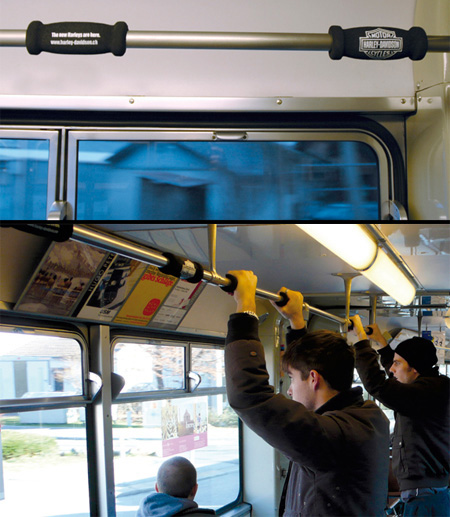
Harley Davidson Bus Handle

Motorbike handles were mounted in buses in Switzerland to announce the arrival of new Harley models. [link]

Harley Davidson Bus Handle Advertisement

Gard Shampoo Bus Handles

Clever bus handles promoting Gard active strong shampoo in Frankfurt, Germany. [link]

Gard Shampoo Bus Handle Advertisement

Amnesty International Bus Handles

Eight bus lines in Hamburg, Germany run this creative advertising campaign against the death penalty. [link]

Amnesty International Hang-Men Bus Handle Advertisement

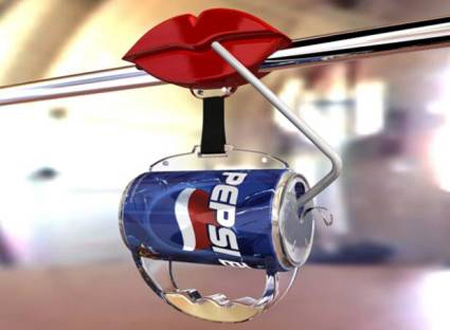
Pepsi Bus Handle

Cool handle advertising campaign for Pepsi was featured on 3400 buses throughout USA. [link]

Pepsi Bus Handle Advertisement

Hankook Tires Bus Handle

Tire-shaped handles emphasize stability and grip of Hankook Tires. [link]

Hankook Tires Bus Handle Advertisement

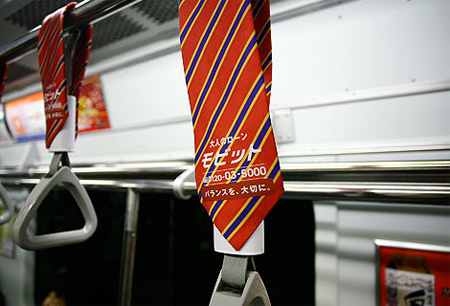
Neck Tie Subway Handles

Tie subway train handles advertising loan company in Tokyo, Japan. [link]

Neck Tie Subway Handle

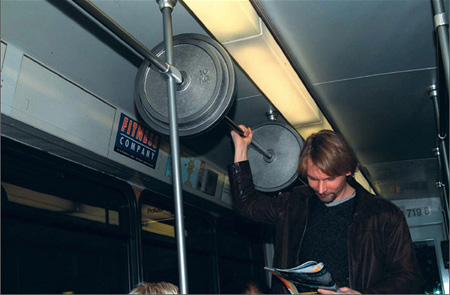
Fitness Company Subway Handle

Clever marketing campaign for the Fitness Company in Germany. [link]

Fitness Company Subway Handle Advertisement

Abused Bus Handles

Creative advertising campaign against domestic abuse in Indonesia. [link]

Abused Bus Handles

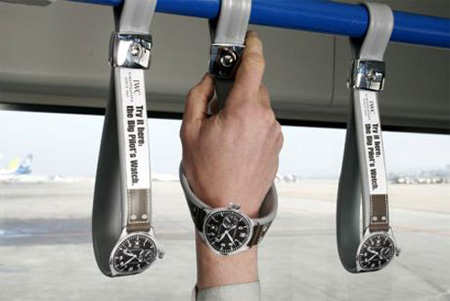
Big Pilot Watch Bus Handles

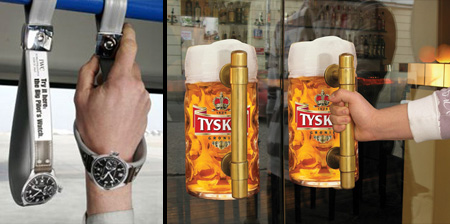
Bus riders in Berlin got to try IWC’s Big Pilot’s watch mid-commute because bus straps have been fashioned into samplers. [link]

Big Pilot Watch Bus Handle Advertisement

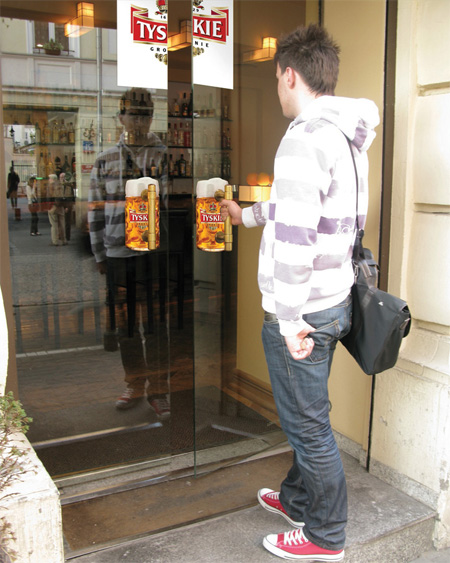
Tyskie Beer Door Handles

Beer mug stickers were installed behind doors of restaurants, pubs and shops as a part of creative Tyskie beer advertising campaign. [link]

Tyskie Beer Door Handles

Did you like this post? Leave your comments below!
Found this Post interesting? Receive new posts via RSS (What is RSS?) or Subscribe to CR by Email
Read More →

Everything I Know about Computers I Learned in the Movies


Word processors never display a cursor. [via allowe]

It is unnecessary to use the spacebar when typing long sentences.

No one ever makes typing errors.

All monitors display 2-inch-high letters.

The high-tech computers used by NASA, the CIA, or other governmental agencies, have easy-to-understand graphic interfaces. Those without have incredibly powerful, text-based command lines that understand plain English. Corollary: Anyone can access any information by simply typing "Access all secret files" on any keyboard.

You can infect a computer with a destructive virus by simply typing "Upload virus." Just as they do in humans, viruses raise a computer's temperature. Soon smoke will billow out of disk drives and monitors.

All computers are connected.

You can access information on any desktop computer, even when it's turned off.

Powerful computers beep whenever you press a key or whenever the screen changes. Some computers also slow down the screen output to reading speed. Really advanced ones emulate the sound of a dot-matrix printer as characters appear on-screen.

All computer panels have thousands of volts and flash pots just beneath their surface. Malfunctions are always indicated by bright flashes, puffs of smoke, showers of sparks, and explosions that throws people backwards.

After typing on a computer, you may safely turn it off without saving the data, naming the file, or specifying its location.

Hackers can easily break into the most sensitive computers before intermission. They only need a few tries to guess secret passwords.

Any "Permission Denied" message has an "Override" function.

Computers take approximately two seconds to boot up.

Complex calculations and uploading or downloading huge amounts of data take about three seconds. Movie modems transmit data at about two gigabytes per second.

When the power plant/missile site/main computer overheats, all the control panels explode shortly before the entire building does.

If you display a file on the screen and someone deletes the file, it also disappears from the screen. There are no backup files. There is no undelete.

All computers interface with all other computers regardless of manufacturer or galaxy of origin.

All computer disks are readable by all computer systems.

All computers can use any application software.

You are asked for a password when you just look at a disk containing encrypted files.

The more high-tech the equipment, the more buttons it needs.

Operators of high-tech computers must be highly trained because the only labeled button reads, "Self Destruct."

Most computers, no matter how small, have reality-defying, three-dimensional, real-time, photo-realistic, animated graphics capability.

Laptops all have real-time videophone capabilities and the performance of a CRAY-MP.

Whenever characters look at monitors, the image is so bright that it projects itself onto their face.

Computers never crash during important, high-intensity activities. Humans operating computers under stress never make mistakes.

Programs are fiendishly perfect and never have bugs that slow down users.

Internet searches always return what you seek no matter how vague your keywords.

All photographs can be enhanced simply by pulling minute details out of the grain. You can zoom into any picture as far as you want. "What's that fuzzy thing in the corner? Enhance." "Look! It's the murder weapon!"

Did you like this post? Leave your comments below!
Found this Post interesting? Receive new posts via RSS (What is RSS?) or Subscribe to CR by Email

Read More →

Fast Food Revealed: Real vs. Ads


You know how fast-food menu items always look amazingly juicy and delicious in advertising and marketing materials? WD was curious to see exactly what these food-styled concoctions actually look like fresh from the fast food, er, kitchen. We hit the city, dealing with long lines and mediocre service to snap some photos of a few franchises’ signature items. See what we found below, as we compare actual results with what the company advertises—the good, the bad and the ugly. [via womansday]


Burger King Whopper

This burger is described on BK.com as containing “1/4 pound of flame-broiled beef, ripe tomatoes, crisp lettuce, creamy mayo, ketchup, crunchy pickles and onions on a toasted sesame seed bun.” After sitting down with 50 other Burger King customers, we found it was more like a cold sesame bun filled with a thin layer of beef, three tablespoons of mayonnaise and warm lettuce with an over-ripe tomato. Although the advertisement shows layers of onions and pickles, our version contained one small pickle and two skinny slices of onion.


McDonald’s Small French Fries

We can’t muster up much negativity about these favored all-American fries. McDonald’s fried potato strips have always been at the top of the fast-food chain for their perfect flavor and texture. Hot and fresh right out of the fryer, our order was shoved into what we wish was a little bit bigger package, but, just as we suspected, when we opened the bag we uncovered exactly what is described on McDonalds.com—“golden, long, thin and perfectly salted fries that are crisp on the outside, tender inside with a great potato taste.”


Taco Bell Crunchwrap Supreme

The outside of the ever-so-popular Crunchwrap Supreme is pretty comparable to the ad; however, the inside is an entirely different story. Though it’s described on TacoBell.com as including “seasoned beef, warm nacho cheese sauce, a crunchy tostada shell, reduced fat sour cream, lettuce and tomatoes,” we hardly found any lettuce and tomato on the Crunchwrap we ordered, and when it was cut open, the contents oozed out—nothing like the perfectly layered neatness in the image.


Pizza Hut Tuscani Lasagna

As one of Pizza Hut’s new Tuscani Pastas, the lasagna is something they are really trying to beef up. Pitched on as “layers of lasagna noodles and real ricotta, Parmesan and Romano cheeses smothered in Italian-seasoned meat sauce and freshly oven-baked with a layer of melted cheese,” the new menu choice looked more like a lasagna pizza. We finally located the noodles, the minimal sauce and ricotta in the center below the thick layer of cheese, but the fresh basil garnish in the ad picture was nowhere to be found.


Wendy’s Homestyle Chicken Fillet

If we used the advertisement image as guidance, the Homestyle Chicken Fillet sandwich from Wendy’s would have a piece of chicken breast large enough to hang over the “premium bun,” a thick slice of tomato and fresh green lettuce. What we got on our tray was a cold white-bread bun filled with a piece of chicken that fits nicely inside (because it is much smaller), one piece of lettuce, lots of mayonnaise (of course) and a piece of tomato.


KFC Potato Wedges

Another selection pretty true to its advertisement is KFC’s Potato Wedges, which, according to KFC.com, has no trans fat and is flavored with “savory herbs and spices.” Even though we can’t tell that from the outside, we must say the picture is a nice representation of what these wedges really do look like. Made with real potatoes and special seasonings, this side dish needs no extra salt and pepper. However, it does weigh in at a whopping 260 calories per small order and contains 740 grams of sodium.


Quiznos Primo Meatball

After lifting up the top half of the somewhat “golden brown” sesame bread and digging under the layers of mozzarella cheese, we found three small meatballs nestled in the “zesty marinara sauce.” In reality, what appears in the picture to be a gigantic meatball creation is just a regular meatball sub that doesn’t have enough sauce on it and is overpriced—the smallest sandwich will cost you $7 a pop.


Dunkin’ Donuts Egg White Veggie Flatbread Sandwich

This DDSmart menu item looks quite slim and trim, neatly sliced and stuffed with veggies—Dunkin’ Donuts seems to have the perfect tactic for promoting it. Described on DunkinDonuts.com as having “fluffy egg whites, peppers, onions and mushrooms,” in actuality, the sandwich has a premade egg white patty with a few veggies tucked in it. Pitched as “easy to hold and eat with minimal mess,” when we attempted to pick up the fast food breakfast sandwich, the cheese spilled out the side. Although the presentation is far from what they led us to believe, the taste is pretty flavorful.


KFC Kentucky Grilled Chicken Box

Even Oprah supported this more wholesome option from the otherwise extremely unhealthy Kentucky Fried Chicken chain. Because of all the hype, the KFC Kentucky Grilled Chicken Box just had to make our list, but we were disappointed at what we found after seeing the tempting advertising image. We braved the hoards of people in line at the 3-in-1 chain restaurant, and found the chicken was shriveled and small, the potatoes seemed to be more like gravy with a drop of potatoes, and the biscuit was—well, a biscuit. Most disappointing was the chicken; unlike in the photo, both pieces were extremely dry.


Burger King Crown-Shaped Chicken Tenders

Much to our surprise, as you can see, these small chicken masterpieces actually do look almost identical to what Burger King shows in the advertisement (and are surely fit for a king). “Have it your way” by choosing four, five or eight tenders and dressing them with BBQ, honey mustard or sweet-and-sour sauce. We opted for four tenders with no sauce, since the fried, 180-calorie menu item is already quite high in fat for something that hardly fills you up. Overall, in an attempt to stand out among fast food chicken nuggets, Burger King has made fun-shaped little rascals that kids will love.


McDonald’s Big Mac

After setting this sucker down on the tray and examining its contents, we must say it’s nothing that’s going to cure your “Big Mac attack.” It appears in marketing campaigns and advertisements that the Big Mac is a double-decker sandwich packed with two layers of veggies, special sauce and beef patties. The sandwich we got came with one piece of American cheese and one layer of veggies along with the two beef patties, three parts of a sesame bun and two coatings of “special sauce” that looked more like plain old mayonnaise.


Subway The Feast

The Feast is the ultimate menu item for this sandwich chain—containing five types of meat and your choice of cheese and bread. According to Subway.com, “It’s the kind of concrete slippers that hunger fears the most”—whatever that means. We aren’t entirely sure that what looks like a fresh and healthy option in ads and billboards fully meets those expectations. After requesting “the works” as our condiments, we unwrapped it to discover, instead of the neatly stacked meats and fresh veggies, a sandwich soaked in mayonnaise and mustard, containing almost no lettuce—and when picked up, all of the contents slipped right through the bread and onto the paper.


Taco Bell Nachos

This 99¢ menu option is an easy and quick on-the-go option—that is, if you don’t have to wait for 15 minutes until your order number is called, like we did. The small side of nachos comes complete with about 20 chips and a side of nacho cheese. We have to say, the snack looks pretty similar to the original image, with hot and crispy tortilla chips and creamy nacho cheese, but perhaps the order is a bit smaller than the overflowing image shows.


Wendy’s Broccoli and Cheese Potato

To avoid all of the fried meals and other greasy temptations, many consumers opt for Wendy’s Broccoli and Cheese Potato, which contains only 2.5 grams of fat and 340 calories. What seems to be a plump baked potato with fresh broccoli florets and cheese in the marketing materials actually looks more like frozen broccoli bits atop a microwaved potato with melted cheese. While it is definitely healthier than most menu options, don’t be alarmed by what it looks like when you open the container.

Did you like this post? Leave your comments below!
Found this Post interesting? Receive new posts via RSS (What is RSS?) or Subscribe to CR by Email
Read More →

10 Secrets your dentist doesn't want you to know


Going to the dentist may seem like a mundane chore, but it can quickly become an expensive one. Here's what you need to know to get the most for your money when shopping for dental care. [via dailyfinance]

Recently, I addressed the annual convention of the International Association of Comprehensive Aesthetics (IACA), an organization of dentists dedicated to continuing education. It was quite an eye-opener.

I realized I knew very little about my dentist. Even worse, I didn't know how to determine if my dentist had the right qualifications and equipment to provide first-class dental care.

There are approximately 165,000 dentists in the U.S., and the U.S. Bureau of Labor Statistics estimates that the yearly earnings of dentists averaged $147,010 in 2007. There is no doubt we are spending a lot of money on dental care and most people do not have dental insurance. But are we spending our money wisely? This is an area of particular interest to retirees and those planning to retire, because dental health issues tend to become more pressing as we age.

Here are the secrets your dentist may not want you to know -- but you need to know to get the best care possible:

Secret #1: Your dentist may not be as educated as you think.

Dentistry has changed a lot since your dentist graduated from dental school. One practitioner told me changes come "almost daily." There have been major advances in most materials used in fillings, bonding and root canals.

The world of neuromuscular dentistry has evolved at a particularly rapid rate. This branch of dentistry treats misalignment of the jaw which can cause headaches, sleep apnea, worn or cracked teeth and severe jaw pain, among many other symptoms.

Dental techniques have also changed. Laser systems can regenerate bone lost to gum disease and improve smiles with gum contouring. Lasers and air abrasion systems can be used to remove some decay without numbing the patient and to achieve superior dental cleaning.

If your dentist is not actively engaged in continuing education, it is unlikely that he or she is keeping up with these developments. Here are some specific questions to ask:

How many hours of continuing dental education a year do you do? The top dentists I interviewed do 100 hours or more.

Where do you go for your dental education? Some of the top places for continuing dental education are LVI Global, the Pankey Institute and the Scottsdale Center for Dentistry.


Secret #2: Your dentist may not have the latest technology.

Technology is an important part of today's dentistry. Is your dentist current? Here are some questions to ask:

Digital x-ray: Dentists who do not have digital x-ray equipment are practicing in the dark ages. Digital x-rays use less radiation than film. They are easier to read and the ability to manipulate contrast makes diagnosis more accurate. This equipment is expensive. It costs $30,000-$50,000. You are worth it.

Ultrasonic Cleaning: Ultrasonic instruments vibrate plaque and calculus off your teeth, even in areas below your gums. It is much more comfortable than old-fashioned hand scraping. They can remove heavy stains (like tobacco and coffee) from the tooth and even treat periodontal disease.

Total cost to your dentist: Around $2000. There is no excuse for not having it.

CEREC: For many dentists, this is the information they don't want you to have. The CEREC system lets your dentist provide a ceramic crown, onlay or veneer in only one visit. Use of CEREC can conserve the tooth structure and permit the dentist to seal the tooth in one appointment. No gagging impressions. CEREC means fewer injections, less drilling and no annoying temporaries.

The big rub is cost. A CEREC system will cost around $120,000. Personally, I don't care. If I have a choice between a dentist who has it and one that doesn't, the availability of CEREC will be the deciding factor.

Diagnodent: This is a laser which the dentist shines on the tooth and it tells whether there is a cavity and how deep it is. What's more, the laser can even tell your dentist that a root canal may be required. With the use of this technology, the dentist can detect cavities, and find them at an earlier stage, than traditional poking around the tooth (and no one likes that!). The initial investment is $4000.


Secret #3:
Your dentist may be using mercury.

I know the American Dental Association and the FDA have no problem with mercury fillings. However, none of the top dentists I spoke to would put mercury in the mouths of their families or their patients. They use a composite filling instead.

Mercury is toxic. As one dentist told me, "the only place I can legally put mercury is in your mouth or in a hazardous waste container." Norway and Sweden have banned the use of mercury fillings.

Even without the toxicity controversy, the use of mercury fillings is still questionable. Mercury expands and contracts with temperature changes, just like in an old fashioned thermometer. This can lead to cracked teeth.

Composite fillings look better. They bond to the teeth and make them stronger (mercury fillings weaken the tooth). Teeth with composite fillings are less sensitive to hot and cold. They require less removal of tooth structure.

Mercury fillings are less expensive and easier for the dentist to use. No continuing education is necessary.

To me this is a no-brainer. If your dentist does not use composite fillings, don't use him.


Secret #4: The lab may be more important than your dentist.

If you are like most dental patients, you have no idea which lab your dentist is using. This lack of information could cost you dearly.

Dental labs create dentures, crowns, bridges, orthodontic appliances, and other dental restorations like implant crowns. There is a huge difference in the quality of these labs.

In order to increase profit, some dentists use foreign labs or cut-rate domestic ones. These labs may include tin, aluminum or even lead in their restorations. A reputable, first class lab will certify its restorations contain none of those metals and provide the dentist and patient a warranty on their craftsmanship.

You should be particularly wary if your dentist is using a lab in China or Mexico, where the practice of using those metals is very common. Some of the top labs in the U.S. are Aurum Ceramics, MicroDental Laboratories, da Vinci Dental Studio, and Williams Dental Lab. I am sure there are many others.

If you don't know where or which lab your dentist is using, you need to find out... now!


Secret #5: There's more to good dentistry than filling cavities.

A competent dentist screens for more than tooth decay. He or she should be concerned about sleep apnea, jaw-related pain known as TMJ or temporomandibular joint disorder, periodontal disease, oral cancer, diabetes and hypertension.

Sleep Apnea: Asking simple questions about snoring, weight gain, or medications such as blood pressure or acid reflux drugs can give your dentist clues about sleep apnea. Find a dentist that takes a thorough medical history.

TMJ: Did you know migraines and neck problems can be related to the position of your jaw? Your dentist should feel your joint and ask about any pain or discomfort you may be having.

Periodontal disease: By carefully checking the condition of your gums for periodontal disease, your dentist can detect early indications of heart disease, stroke and diabetes.

Hypertension: Most Novocain used by dentists contains epinephrine, which can increase your blood pressure. If you already have dangerously high blood pressure, the addition of epinephrine could cause a stroke. Your dentist should be aware of your medications and take your blood pressure before giving an injection or doing any dental work.

Advancements in oral cancer screening allow your dentist to find it sooner. A Vizilite exam is a detection tool used by dentists to see tissue changes in their earliest form. The dentist has you rinse with a solution and then shines a specially designed light in your mouth which will indicate the presence of oral cancer. A similar system by Velascope is also very effective at early detection.

If your dentist is not doing these health screenings, find one who does.


Secret #6: You are probably using the wrong specialist for dental implants.

Since dental implants involve the removal of a tooth and replacing it with an artificial tooth, many patients assume that an oral surgeon is best qualified to do it. This can be a flawed assumption.

Periodontists, who specialize in gum disease, may be a better option. Periodontists have special training in gum tissue and underlying bone in the mouth, which are significant issues in dental implants.

Whether you use your general dentist, a periodontist or an oral surgeon, you should ask these questions:

What is your success rate with implants? It should be at least 94 percent.

How long is the procedure? It should be no more than thirty minutes.

Do you use a surgical guide? A surgical guide directs the implant drilling system and provides for accurate placement according to the digital surgical treatment plan. It is important to confirm that the dentist doing your implant uses a surgical guide.

Do you use a CT scan and 3-D imaging software? This technology assesses bone structure and identifies the best sites for dental implant placement while avoiding vital structures like nerves.

Many dentists hold themselves out as implant specialists. You need to screen them very carefully before entrusting them with this surgical procedure.

Secret #7: Bad dental advice about dentures can be fatal!

Dentures are no joke to the millions of senior citizens who use them. While patients often pride themselves on keeping the same dentures for many years, this can be a big mistake. Your dentist should examine your dentures for evidence of wear. Wearing down the teeth on your dentures can result in distorted facial characteristics, collapse of the bite and closure of the airway.

Dentures need to be replaced at least once every seven years. Poor fit or worn dentures can cause sleep apnea, stroke or even death.

Yearly cancer screening exams of denture users are extremely important.

Contrary to common perception, dentures should be worn at night in order to insure that the airway passage is kept open. Your dentist should instruct you on proper denture cleansing and should check you regularly for signs of infection.


Secret #8: Your dentist may not know enough about sleep apnea.

The most common form of sleep apnea is caused by a blockage of the airway during sleep. It is a pretty scary condition. The patient can stop breathing hundreds of times during the night.

A common treatment for sleep apnea is Continuous Positive Airway Pressure (CPAP). CPAP involves blowing pressurized room air through the airway at high enough pressure to keep the airway open. Many patients find it difficult to adjust to this device and want to avoid surgery, which is another treatment option. As an alternative, your dentist, working with your physician, can custom make a device that guides the lower jaw forward, called a mandibular advancement device or MAD. MAD devices are more comfortable to wear and the compliance rates are much higher than using CPAP.

If you have (or suspect you have) sleep apnea, here are some questions to ask your dentist:

Are you a member of the American Academy of Dental Sleep Medicine?

Do you regularly attend the annual meeting of the Academy?

Do you work with Ear, Nose and Throat physicians and sleep physicians, where appropriate?

You can also call sleep centers and ask them what dentists they refer to in your area.

Sleep Apnea is potentially a very serious medical condition. It is important to do careful due diligence before you select a dentist to treat it.


Secret #9: Not all cosmetic dentists have the skills to really improve your smile.


A beautiful smile is a big part of our appearance. Cosmetic dentists promise us beautiful smiles (a "smile makeover"). But how do we know if they can deliver?

Any dentist can call herself a "cosmetic dentist." Here are some questions that will help you select one that is qualified:

1. Have you had post-graduate training? If so,where? The cosmetic dentistry field has changed rapidly over the years. A dentist with no post-graduate training is not likely to be current with these advancements. Look for post graduate training in porcelain veneers from well known schools like LVI Global, the Pankey Institute and the Scottsdale Center for Dentistry.

2. What kind of veneers do you use? The best veneers are either felspathic (super thin) veneers, or CAD/CAM veneers, which can be milled and made by a computer. There are pluses and minuses of both. Your dentist should explain the differences to you.

3. Show me the... veneers! Your dentist should be able to show you ten or more before and after photographs or videos. She should be willing to give you the names of patients who have consented to be used as references. Be cautious. Some dentists use before and after pictures of models they did not work on. Verify that what you are seeing is work done on actual patients!


Secret #10: How to avoid the root canal your dentist says you need.

Your dentist has just conveyed the dreaded news: "You need a root canal. Here's the name of the endodontist I recommend."

Now what?

Endodontists receive at least two years of additional training after dental school. They are root canal specialists. Start by checking to be sure the endodontist is licensed in your state. Some endodontists become Diplomats of the American Board of Endodontics and are "board certified." You can check to see if your endodontist is board certified by going to the American Board of Endondontics Web site.

Ask your endodontist if he uses a surgical microscope during treatment. These microscopes magnify the tooth approximately 20 times and greatly increase success rates. If your endodontist does not use a surgical microscope, find one who does.

Once you go an endodontist, it is almost a foregone conclusion that he will perform a root canal. That is his business and it is very lucrative. But is it always necessary?

Ask your endodontist if he has considered the "ferrule effect". Technically, this means that a root canal is unlikely to be successful if there is not enough tooth structure above the gum line to protect the tooth from coming loose or fracturing after it has been prepared for a crown.

If your tooth fails the "ferrule effect" test, you might be better off with an extraction and an implant, which will likely outlive you.

Still not a walk in the park, but far better than enduring an unnecessary root canal.


Did you like this post? Leave your comments below!

Found this Post interesting? Receive new posts via RSS (What is RSS?) or Subscribe to CR by Email

Read More →

5 Apps Tap the Internet's Infinite Playlist


It used to be you needed a ginormous hard drive to build and store your digital music collection. But now that most songs exist somewhere in the cloud—on YouTube, one-stop streaming sites like imeem, or blog aggregators like Hype Machine—services have emerged that help you squeeze the Internet for any track you need. Wherever music lives, you can now play, collect, and share it without downloading any audio files. None of these sites is pitch-perfect, and their fidelity isn't as high as your meticulously encoded lossless library. But in these lean times, free jams are sounding better by the minute. [via wired]

5 Sites That Tap the Music in the Cloud

Fizy
This Turkish site compiles audio from around the Net into a database from which you can curate your own playlists. It's fast as blazes (for now, anyway) and boasts a fat catalog.
Wired Simple profile pages facilitate playlist-sharing. Reports recently played songs to FriendFeed, RSS, or just your profile. Shuffle function.
Tired Bare-bones user profiles limit social utility.

Muziic
Developed by high schooler David Nelson with help from his dad, this upstart accesses the songs on YouTube via an iTunes-like interface.
Wired Makes the music on YouTube feel local. Sharing feature helps you add your own MP3s to the cloud.
Tired Requires Windows XP or Vista. Seizure-inducing design. Catalog limited to what's on YouTube. Special software installation necessary.

Songza
Songza wraps the music of imeem and YouTube in a sweet, simple Web interface, the work of Scott Robbin and Aza Raskin—whose father, Jef Raskin, sired the Apple Macintosh.
Wired With a click, Play, Share, Rate, and Add to Playlist tools unfold like a clover. Can use services other than imeem and YouTube. Playlist appears on profile page and RSS feed.
Tired Only one playlist per user.

Spotify
A P2P streaming architecture lets users in supported countries create collections from a massive in-house music archive.
Wired Fast, free playback through an efficient interface that rivals iTunes. Smooth, robust streaming. Live tech support. $14 per month removes ads.
TiredCurrently restricted to Europe (a US rollout is being negotiated). Requires software installation.

Twones
Prefer to use iTunes or other downloadable software for your local playback? Twones has you covered. It also tracks your activity on multiple online services and offline players through a single Web interface.
Wired Small-fry sites can sign up to be included in the search, theoretically giving you access to a wider variety of tracks.
Tired Limited playback on the site itself.

Did you like this post? Leave your comments below!
Found this Post interesting? Receive new posts via RSS (What is RSS?) or Subscribe to CR by Email

Read More →

Unbelievable! Absolute friendship between a man and 38 lions!


Did you like this post? Leave your comments below!

Found this Post interesting? Receive new posts via RSS (What is RSS?) or Subscribe to CR by Email
Read More →

10 Things We Hate About Wireless Carriers


The companies that provide cell phone voice and data make their billions by cheating. They must be stopped.

The consumer electronics scene in the U.S. is wonderful and horrible at the same time. The devices, technologies and innovation are wonderful. The provision of wireless access is horrible. U.S. carriers are some of the most backward, unscrupulous and anti-customer companies in the nation. [via pcworld]

So, carriers, this column's for you. Here's what I hate about how you do business.

1. You overcharge for service

A recent survey by Nielsen found that low prices for wireless service is the No. 1 thing customers want from carriers. Yet this is exactly what U.S. customers aren't getting. According to a new survey from the Organization for Economic Cooperation and Development, the U.S. is in the top three most expensive countries for wireless service worldwide (Canada and Spain are the others). According to the report, Americans pay an average of $635.85 per year for cell phone service (compared with $131.44 per year in the Netherlands). Why do Americans pay five times more for cell phone service than the Dutch?

2. You're a global laggard in new technologies

Dropped calls, lack of service, nonexistent coverage in many rural areas -- the inadequacies of U.S. wireless services are well known. But what really irks mobile enthusiasts is the slow rollouts of new technologies. The most bleeding-edge phones are rarely, if ever, sold in the U.S. In Japan, people are routinely using 4G services, watching TV and using cell phones as credit cards. If U.S. carriers are charging the most for service, why are we getting the least? Why are we always behind?

Sure, you've got a dozen excuses why the U.S. market can't support new technologies the way European and Asian markets do. Making up excuses is something you're really good at. Providing new technology, not so much.

3. Handset discounts are a shell game, not a 'subsidy'

Like so many of your standard policies, the subsidizing of cell-phone handsets (and increasingly netbooks and other mobile broadband devices) is presented as a benefit, when it is, in fact, another way to get more money out of us.

If cell phones weren't subsidized, then we'd know how much we're paying for the phone and how much we're paying for wireless services. With the subsidy, we have no idea.

You'd probably pay $599 for a new iPhone 3GS with 16GB of storage. But for eligible customers who sign a new, two-year contract, the subsidized price is $199. Do you think AT&T spreads the $400 difference over the life of your contract? Or is it $600? $800? How much are you paying for that discounted phone? You won't and can't ever know. Subsidies don't save you money. They cost you money. The business model is to prevent you from knowing the price of your handset so you can't make an informed decision.

The truth is that the word "subsidy" doesn't describe the pricing. Nobody is subsidizing your phone. A subsidy is when one organization -- say, the government -- provides money to another organization or person to encourage some form of behavior. Some farmers, for example, get a subsidy from the government to grow certain types of crops. Food stamps for the poor are a subsidy.

When you get a "discount" on your cell phone, YOU pay the difference, not the carrier, not the handset maker. Sure, they'll bury the costs in a muddled monthly bill. But believe me, you're the one paying.

4. You seek new ways to get money for nothing

New York Times columnist David Pogue launched a high-visibility effort last month to address just one of the many ways carriers shamelessly take money away from customers for nothing. Pogue noticed that most of the carriers have mandatory, 15-second voicemail instructions that are played after your own voice-mail message is played. For example, Verizon plays: "At the tone, please record your message. When you have finished recording, you may hang up, or press 1 for more options. To leave a callback number, press 5."

Everyone already knows how to leave a voicemail message. Apple required AT&T to drop the requirement, for example, and somehow iPhone users are still communicating with each other.

Pogue estimates that Verizon, for example, takes $620 million a year away from customers for all the collective "minutes" required to listen to these messages. That's just one carrier, and just one example of how carriers make money by optimizing what they call Average Revenue Per User (ARPU).

Another example is SMS. On average, Verizon, AT&T, Sprint Nextel and T-Mobile rates for sending SMS messages have doubled over the past three years. It costs carriers about one penny to send each SMS message, but some now charge customers about 20 cents. During this three-year period, the cost to carriers to deliver SMS messages most likely stayed the same or declined, but all four carriers doubled their rates. I believe the most likely reason for the price increases was to persuade customers to choose all-you-can-eat bundled deals, which tend to cost about $20 extra per month.

And yet another example is the charging of minutes for both parties for each call. In Europe, the caller pays minutes for the call, and the receiver pays nothing. In the U.S., both caller and callee pay.

Carriers employ experts to examine all the angles to figure out which combination of bundles and packages and pricing will extract the most money from each customer. It's not about charging more money for better service. It's about charging more money for the same service.

5. You want to lock me in

Remember when we could sign up for a one-year contract? Why did carriers eliminate that option? The reason is that locking in customers for two years is twice as good for the carriers as one year. They make more on early-termination fees. They get to create the illusion of lower monthly prices by spreading the cost of a handset discount across 24, rather than 12, months.

Carriers collude with handset makers to artificially link handsets to specific carriers. The iPhone on AT&T is one such example of collusion, as is the Palm Pre on Sprint and the G1 on T-Mobile. Carriers and handset makers create these fake limitations for precisely the same reason movie theaters don't let you bring in your own food -- because it creates mini-monopolies that enable gouging on prices. Why do you think 10 cents worth of popcorn costs $4.50 at the megaplex?

In some European countries, this practice is considered anticompetitive and is against the law.

6. You aggressively oppose net neutrality

The degree to which carriers want to reject net neutrality, which is little more than fair and equal Internet access, was revealed this month when AT&T and Verizon (and Comcast) rejected $4.7 billions in grants -- not loans, grants! -- in government stimulus money because they stipulated fairness in the provision of services.

Why would corporations reject free money? Because they've reasoned that they'll make more than $4.7 billion from you and me by rejecting the fair, equitable provision of mobile broadband services.

7. You want to lock out competition

I don't know if it was AT&T, Apple or both that decided that the Google Voice app should be banned from the iTunes store, but locking out services that threaten total control is standard operating procedure in the U.S.. wireless carrier industry. Competition and innovation is the last thing carriers want. So they use their ownership of the wireless pipes to block the applications and services that would need to move through those pipes.

8. Your solution to public opposition is more lobbying

As the public becomes increasingly outraged at the carriers' unethical, shameless and anticompetitive actions, their response is not to improve behavior, but to spend customers' money on hiring lobbyists to influence Congress and the White House. In a recession, when companies are cutting back and laying off workers, both AT&T and Verizon are increasing the millions spent on hiring lobbyists to influence the government.

9. You're growing too powerful

With nearly every netbook, smartbook, eBook reader, GPS device, digital camera and wristwatch poised to potentially support mobile broadband wireless connectivity, the carriers are positioning themselves to seize control of the consumer electronics industry. They want to become the electronics superstores, extending their abusive business model beyond cell phones to encompass every future device with a wireless connection.

10. You've forgotten that we own the airwaves

Cell phone carriers have rights, too. They own the towers and the servers that make wireless voice and data connectivity possible. They have the right to use their capital as they please, charge what they like and offer whatever combination of prices and services that the market will bear.

But all that equipment is useless without access to the airwaves, which are by law owned by the people. And that's what makes the wireless carriers business different from other industries. Companies that are granted licenses to use the publicly owned airwaves should be required by our government to meet certain standards of fairness, equal access and competitiveness. That's not happening right now. It's time to let your state and national politicians know that you want this industry reined in.

Did you like this post? Leave your comments below!
Found this Post interesting? Receive new posts via RSS (What is RSS?) or Subscribe to CR by Email

Read More →

Seven Crimes That Will Get You a Smaller Fine than File-Sharing


Thinking about file-sharing? Don't. You'll get fined, and crime doesn't pay (unless you rob banks and/or armored cars, then it pays very well). Take it from Jammie Thomas, who was fined $2 million for downloading 24 songs, or anyone else who tried to fight the RIAA.

Instead, try another crime, because plenty of them draw far lighter penalties than downloading Jason Mraz's latest. Thanks to the Mechanics blog at Gapers Block, here are seven crimes that will get you smaller fines than file-sharing:

1. Child abduction: the fine is only like $25000.

2. Stealing the actual CD: the fine is $2,500

3. Rob your neighbor: the fine is $375,000

4. Burn a house down: The fine is just over $375,000

5. Stalk someone: The fine is $175,000

6. Start a dogfighting ring: the fine is $50,000

7. Murder someone: The maximum penalty is only $25,000 and 15 years in jail, and depending on your yearly salary, would probably be far slighter a penalty that $2 million.

Seriously, murdering someone will result in a lighter overall penalty than downloading a bunch of songs and getting caught. Granted, you don't get shivved in the showers at home, but still.

Did you like this post? Leave your comments below!
Found this Post interesting? Receive new posts via RSS (What is RSS?) or Subscribe to CR by Email
Read More →

How 10 digits will end privacy as we know it


Internet denizens and urban dwellers alike need to recognize that an era of anonymity is ending. [via cnet]

The population of the world stands at about 7 billion. So it takes only 10 digits to label each human being on the planet uniquely.

This simple arithmetic observation offers powerful insight into the limits of privacy. It dictates something we might call the 10-Digit Rule: just 10 digits or so of distinctive personal information are enough to identify you uniquely. They're enough to strip away your anonymity on the Internet or call out your name as you walk down the street. The 10-Digit Rule means that as our electronic gadgets grow chattier, and databases swell, we must accept that in most walks of life, we'll soon be wearing our names on our foreheads.

A study of 1990 U.S. Census data revealed that 87 percent of the people in the United States were uniquely identifiable with just three pieces of information (PDF): five-digit ZIP code, gender, and date of birth. Internet surfers today spew considerably more information than that. Web sites can pinpoint our geographical locations, computer models, and browser types, and they can silently track us using cookies. Banking sites even confirm our identities by verifying that our log-ins take place at consistent times of day.

Database dossiers, too, carry surprising amounts of identifying information, even when specifically anonymized for privacy. Researchers at the University of Texas at Austin last year studied a set of movie-rating profiles from about 500,000 unnamed Netflix subscribers (PDF).

Knowing just a little about a subscriber--say, six to eight movie preferences, the type of thing you might post on a social-networking site--the researchers found that they could pick out your anonymous Netflix profile, if you had one in the set. The Netflix study shows that those 10 deanonymizing digits can hide in surprising places.

Our physical belongings also betray our anonymity by silently calling out identity-betraying digits. Small wireless microchips--often called radio frequency identification, or RFID, tags--reside in car keys, credit cards, passports, building entrance badges, and transit passes. They emit unique serial numbers.

Once linked to our names--when we make credit card purchases, for instance--these microchips enable us to be tracked without our realizing it. One popular book inflames imaginations with the lurid title, "Spychips: How Major Corporations and Government Plan to Track your Every Move with RFID."


But wireless microchips also highlight the futility of anonymity protections. To begin with, concerns about RFID tracking miss the forest for the trees. After all, mobile phones are ubiquitous and can be tracked at much longer ranges than standalone chips. Many people have GPS receivers in their phones and are signing up for location-based services, voluntarily (if selectively) disclosing their movements. There's little point in hiding the serial numbers of chips when your mobile phone squeals on you.

Many scientists (including me) have developed antitracking techniques for mobile phones and microchips. Instead of fixed serial numbers, wireless devices can call out changing pseudonyms, such as the rotating license plate numbers on spies' cars in the movies. The problem is that the plates may change, but the car always looks the same. In this regard, chips are like cars.

Scientists at ETH Zurich recently showed how to identify microchips uniquely using radio waves (PDF)--and consequently to see through the disguise of pseudonyms. Their experiments showed that thanks to manufacturing variations, microchips, laptop Wi-Fi cards, and other devices can't help but emit physical "fingerprints"--essentially God-given serial numbers. More digits that we radiate unknowingly.

In the end, we probably won't need to carry anything at all to see our identities betrayed in public spaces. There are already tens of millions of surveillance cameras in public spaces in the United States.

Face recognition software is crude today, but it will improve. Cameras will eventually recognize faces as well as people do. Unlike people, though, they'll have the backing of databases containing millions of faces--or the headshots that so many of us already post online.

Thankfully, despite proliferating sources of those 10 digits that are fatal to anonymity on the Internet and the sidewalk, we can still prevent the world of the film "Minority Report." There are many defensible facets to privacy beyond identity. Even if our names are blazoned forth to all and sundry, we still have the opportunity to safeguard health care and financial data, entertainment preferences, purchase histories, and social interactions.

In this battle, identity theft is a key challenge for technologists and policymakers. The only way to prevent unauthorized access to personal data is to ensure that even when criminals learn the digital constituents of your identity, they can't steal it. Strong authentication will need to fill the gap as the privacy of identities crumbles.

Perhaps the world will be friendlier when in-store advertisements greet you personally, criminals wear "Hello, My Name Is" badges, and the people you meet at parties already have your bio in hand. Facebook, Twitter, and pervasive blogging already augur a society of reflexive exhibitionism and voyeurism. But the technologies that advance us into a world of omniscience will also bring us a step backward.

For years, people aspired to escape small towns for the big city, for the fresh start of an identity without history. The Internet offered similar horizons of freedom. But the society of the small town will soon have us back in its clutches, for good and bad. And on the Internet, everyone will know if you're a dog.

Did you like this post? Leave your comments below!
Found this Post interesting? Receive new posts via RSS (What is RSS?) or Subscribe to CR by Email
Read More →

The Top 10 Things We're Glad the Recession Killed


With the near constant barrage of unemployment statistics, budget deficits, and bankruptcy announcements, it’s easy to get swept up in all the doomsday rhetoric surrounding the recession. But not all the effects of the economic downtown are bad. Some of them are actually a cause for celebration. [via spike]

Source: Steve Bronstein/Stone/Getty Images

10. The Five Dollar Cup of Coffee

image

Source: Ryan McVay/The Image Bank/Getty Images

It doesn't take an economics degree to see that the overpriced coffee craze was getting out of control. When the fake money ran out, so did people's desire to fork over more money for a cup of java than a gallon of gasoline, as indicated by the situation Starbucks finds itself in as of late.9. Junk Mail

image

Source: Jeffrey Coolidge/Iconica/Getty Images

Advertisers like to refer to junk mail as "direct mail" but we know better, because this crap is completely useless on the vast, vast majority of the populace. So when money gets tight, advertisers cut back on their direct mailing to save money. Hey ad guys, here's a pro tip: Stop sending useless crap to people who don't want it to achieve maximum savings!

8. Celebutaunt Culture

image

Source: Phil McCarten/Stringer/Getty Images

Back in the carefree days of the early 21st century when tons of credit was readily available, living beyond our means was hip, and being slutty was not only acceptable, but embraced, with "celebutaunts" like Paris Hilton and Nicole Richie heralded as the pinnacle of pop culture. Thankfully, the dose of economic reality handed to us recently proved once and for all that your dog does not need its own jewelry.

7. Useless Junk Stores

image

Source: ULTRA.F/Digital Vision/Getty Images

Another by-product of a society with too much money on its hands is the "Useless Gadget/WTF is This??" store. Places whose entire purpose is to sell you things you never knew you needed.

Perhaps unsurprisingly, when the extra money dried up, people came to the realization that they didn't actually need an iPod dock in their shower, and places like the Sharper Image took a nosedive.

6. Cribs-style TV Shows

image

Source: Richard Drury/The Image Bank/Getty Images

Can't say I'll miss these types of programs, either. These shows were the apex of the worst aspects of "bling" pop culture -- a trend founded on an obsession for consumerism and vanity. The purpose of each episode was to show the viewer how much better famous people lived than mere commoners.

These shows seemed to have been designed to create a sense of jealously and want in those viewers so they'd go out and spend more money on things they didn't need so they could pretend they were also famous rap stars. Guess it's tough to get people excited about glamour when their house is getting foreclosed on. Funny thing is, all that expensive crap we saw wasn't even theirs.

Production of Cribs ended over a year ago, and we can only hope that other shows of this ilk will soon follow suit.

5. Hummers

image

Source: Scott Olson/Staff/Getty Images

More than any other large SUV on the market, Hummer took a real hit from the economic turmoil of the last few years--so much so that GM has been desperately trying to sell off the brand, but even that is proving difficult.

The "go green" trend that's been sweeping the nation lately also isn't doing those gussied-up Chevy Suburbans any favors either, so it looks like Hummer just might be headed straight to the junkyard very soon.

4. Crazy Gas Prices

image

Source: Jens Lucking/Photographer's Choice/Getty Images

Was it only a year ago that a gallon of regular gas cost upwards of four-and-a-half bucks a gallon in California? A lot can happen in a year. Like the near-total collapse of the global economic infrastructure! As much as oil companies like to say that demand dictates the price and that the speculators in the stock market were also to blame, we all know that was almost entirely B.S.

When people ran out of money they could spend on overpriced gas and oil company executives watched their profits go from record-breaking to practically nothing overnight, gas prices were magically sliced in half. Did everyone you know stop driving their cars or even reduce to half as much as they did last summer? Didn't think so.

3. Ridiculous Housing Costs

image

Source: Diane Macdonald/Photographer's Choice RF /Getty Images

When a fifty-year-old, three-bedroom shack located in a bad neighborhood in Los Angeles is valued at over $1,000,000, something is obviously really friggin' wrong. And when mortgage prices go up, so does the price to rent those properties.

So now that pretty much all real estate across the country has lost nearly a third of its value over the last two years, some of us can go back to fantasizing about someday actually owning a home.

2. Bling

image

Source: Halfdark/fStop/Getty Images

I'll put it simply: Bling makes me angry. It is the epitome of the "OMG I have too much money and I must buy shiny things" mentality. A culture of excess that champions the largest amount of misuse. A trend founded on wasting money on things which literally serve no purpose whatsoever. Bling, I am glad to see you go. Your spinners are stupid, your jewelry is gaudy, and your precious metal teeth make you look like a loser.

1. The Perception of Total Unaccountability

image

Source: Yamada Taro/Digital Vision/Getty Images

Before the financial apocalypse, CEOs were faceless entities in ivory towers who we never heard from unless they were barking orders to us from megaphones. If things went wrong, the buck got passed and passed until nobody knew where the buck was or what it represented anymore.

While we're still a long way from full corporate accountability, it's nice to see at least a few major players had their feet held to the fire. If nothing else, it serves as a warning to the rest of the racquetball club that the next person on the hit list might be them, so it might be time to go back and work on that fatally flawed business plan, rather than expecting the taxpayers to foot the bill.

One can hope, anyway.

Did you like this post? Leave your comments below!
Found this Post interesting? Receive new posts via RSS (What is RSS?) or Subscribe to CR by Email

Read More →

More Post From The Web